
Turkey Trot: What to Wear and How to Manage Your Layers
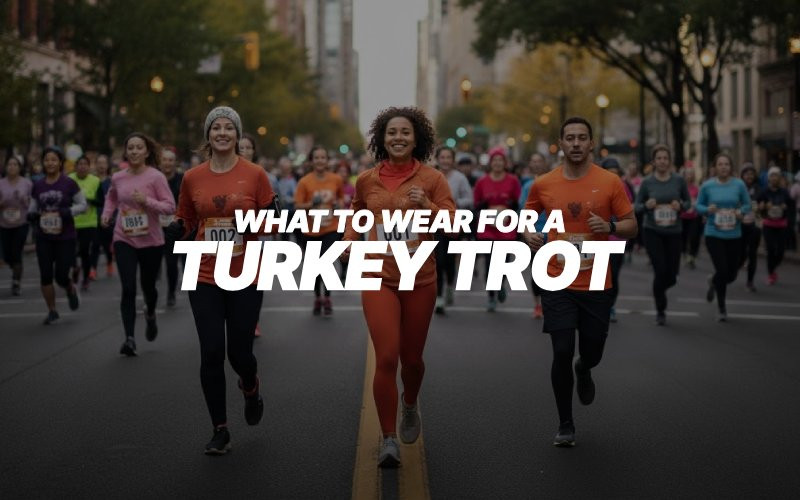
When you're getting ready for one of the funniest runs of the year, you have a choice. Some people go all out with funny Turkey Trot costumes, while others see the run as a chance to test their limits, which calls for a more practical outfit. The biggest challenge here is figuring out what outfit would work best for the weather, as it can be pretty chilly or change a lot during the day. To help out new runners, I've put together this guide on what to wear for a Turkey Trot.
What’s a Turkey Trot
A Turkey Trot is a fun and festive running event that takes place around Thanksgiving. These races, often 5K or 10K, are a popular way for people to get some exercise before digging into the holiday meal. They're open to runners of all abilities and have a real family-friendly vibe, with many folks showing up in Thanksgiving-themed costumes.
Closest options to Mansfield, TX, for Thanksgiving week:
- Mansfield Turkey Trot — in Mansfield. 5K and 1K, USATF‑certified 5K course. Thu Nov 27
- CRC Thanksgiving Day Run — Fort Worth (Trinity Park). Half, 10K, 5K, 1M. Thu Nov 27
- Run With The Turkeys Trot — Keller. 10K and 5K on Keller Trails. Thu Nov 27
- Grand Prairie Turkey Trot 5K — Grand Prairie. 5K. Thu Nov 27
- Scheels North Texas Turkey Trot — Frisco. Multiple distances. Thu Nov 27
Putting Together Turkey Trot Outfit
The 20-Degree Rule
A golden rule many runners use is the "dress for 20 degrees warmer" principle. Your body heats up fast once you start running, so if the forecast says 40°F, dress as if it were 60°F. You’ll feel a bit chilly waiting for the race to begin, you'll be comfortable after the first mile or two.
If you plan on walking the race, though, you won't heat up as much, so we suggest adding an extra layer.
Also, a strong wind can make it feel much colder. If it's windy, it's a good idea to adjust and dress for about 10 degrees cooler than the thermometer reads.
Layering
Nearly every seasoned runner will tell you that layering is everything. Think multiple thin layers that you can easily take off and tie around your waist or stuff into a pocket.
The base layer should be a snug, moisture-wicking shirt or long sleeve that pulls sweat away from your skin - think merino wool, polyester, or nylon. Whatever you do, avoid cotton - it traps moisture and will leave you feeling cold and damp. As temperatures drop, progress to thermal or heavyweight base layers. Look for thumbholes (sometimes called "cuffins" in the running community) to keep hands warm early in the run.
On top of that, you might add a fleece, half-zip top or light vest for insulation. A running vest, in particular, can be a great choice because it keeps your core warm while allowing your arms to breathe.
An outer shell - a lightweight, packable windbreaker or a windproof jacket that you can stuff into a running belt or vest pocket - will protect you from the elements. You can start warm, shed it mid-race when you heat up, and put it back on after you finish to avoid getting chilled. Look for breathable shells.
For your lower body, running tights are usually sufficient for anything above 20°F. In colder temps, you might want to look into tights with windproof panels. Some runners even double up on tights - pairing lightweight tights with heavier thermal tights - though this restricts mobility for many.
Extremities
In colder climates, your hands, head, and feet need attention too. Light gloves are usually fine for temperatures above 30°F, but you'll want to switch to heavier gloves or mittens as it gets colder. Some runners even use mittens with liner gloves underneath for extra warmth.
A headband can keep your ears warm without making you overheat, but once the temperature drops toward 20°F, add a beanie or even a balaclava. Consider eye protection.
Sock selection is important. Avoid cotton entirely. Instead, choose polyester and spandex blends or merino wool by Smartwool, Feetures, and Balega. Heavy or thermal wool socks are appropriate for temperatures below 20°F; some runners wear two pairs in extreme cold (make sure your shoes still fit comfortably).
More Tips for Dressing for a Turkey Trot Run
Don't overdress. Instead, wear layers you can easily remove and tie around your waist or store in a running belt.
Test your gear. Don't wear anything new on race day. Do a training run in your planned outfit to make sure everything is comfortable.
Know yourself. Ultimately, what you wear is personal. Some people run hot and need fewer layers, while others get cold easily. Pay attention to how your body feels in different temperatures and adjust accordingly.
For first-time Turkey Trot participants, it’s better to slightly underdress rather than overdress, as it's easier to push through initial discomfort for a 5K or 10K than to manage overheating that leads to excessive sweating and post-race chilling.
Have fun out there, and happy trotting!
EXPLORE POPULAR ARTICLES
-

Pronation Guide for Runners: At-Home Test + Best Picks
Feb 27th 2026Understanding how your foot moves is one of the most practical things you can do before buying your
-

-

Brooks Launch 12 Overview: Speed on a Budget
Jan 30th 2026The Brooks Launch 12 proves that you don't need to break the bank to get a lively, responsive ride t

