
Hoka Trail Shoes Compared [2026 Guide]
![Hoka Trail Shoes Compared [2026 Guide]](https://cdn11.bigcommerce.com/s-eeul26hjka/images/stencil/1280x720/uploaded_images/hoka-trail-shoes-compared.jpg?t=1790601688 "Hoka Trail Shoes Compared [2026 Guide]")
Here, we explain and compare most popular Hoka trail shoes. By the end of this guide, you'll know which one actually fits your terrain, your pace, and your mileage.
Hoka trail shoe lineup at a glance
Before we get into the details, here's the one-line version of each shoe:
- Speedgoat 7 — the all-rounder
- Challenger 8 — door-to-trail
- Stinson 8 — max comfort on easy terrain
- Mafate X — plated ultra cruiser
- Tecton X 4 — the racer
Quick comparison table
| Shoe | Weight | Stack (heel/forefoot) | Drop | Plate | Outsole | GTX Available | Price | Best For |
|---|---|---|---|---|---|---|---|---|
| Speedgoat 7 | 9.7 oz (M) / 8.3 oz (W) | 35-37mm / 31-33mm | 4mm | No | Vibram Megagrip | Yes | $165 | Everyday trail miles, ultras |
| Challenger 8 | 9.7 oz (M) / 8.2 oz (W) | 44mm / 36mm | 8mm | No | Durabrasion rubber | Yes | $155 | Road-to-trail, beginners |
| Stinson 8 | 11.3 oz (M) / 9.6 oz (W) | 43-44mm / 38-39mm | 5mm | No | Durabrasion rubber | No | $180 | Easy terrain, hiking, walking |
| Mafate X | 12.1 oz (M) / 10.3 oz (W) | 49mm / 41mm | 8mm | Yes | Vibram Megagrip | No | $225 | Ultra training, long days |
| Tecton X 4 | 9.2 oz (M) / 8.2 oz (W) | 39-40mm / 34-35mm | 5mm | Yes (dual) | Vibram Megagrip Litebase | No | $275 | Racing, technical speed |
Speedgoat 7
If you only own one Hoka trail shoe, there's a good chance it's this one.
What it is: The Speedgoat has always been Hoka's do-everything trail shoe, and the 7th version keeps that spirit while finally updating the midsole. This is the shoe you reach for when you don't know exactly what the trail is going to throw at you.
How it feels: The switch to a supercritical EVA midsole gives this version more life underfoot than past Speedgoats, without turning it into a bouncy race shoe. Shock absorption and energy return both see a real bump, translating to a ride that feels supportive and composed rather than springy – the kind of cushion that keeps your legs feeling fresh deep into a long run, rather than one that wants to launch you forward. On steep or loose ground, the wide platform, tall sidewalls, and "bucket seat" midsole design give it a grounded, "it's got you" feeling, even though the stack is fairly tall. Traction is a genuine highlight, too: the Vibram Megagrip outsole, with its chevron-shaped and laterally angled lugs, digs into mud, snow, and loose scree with confidence.
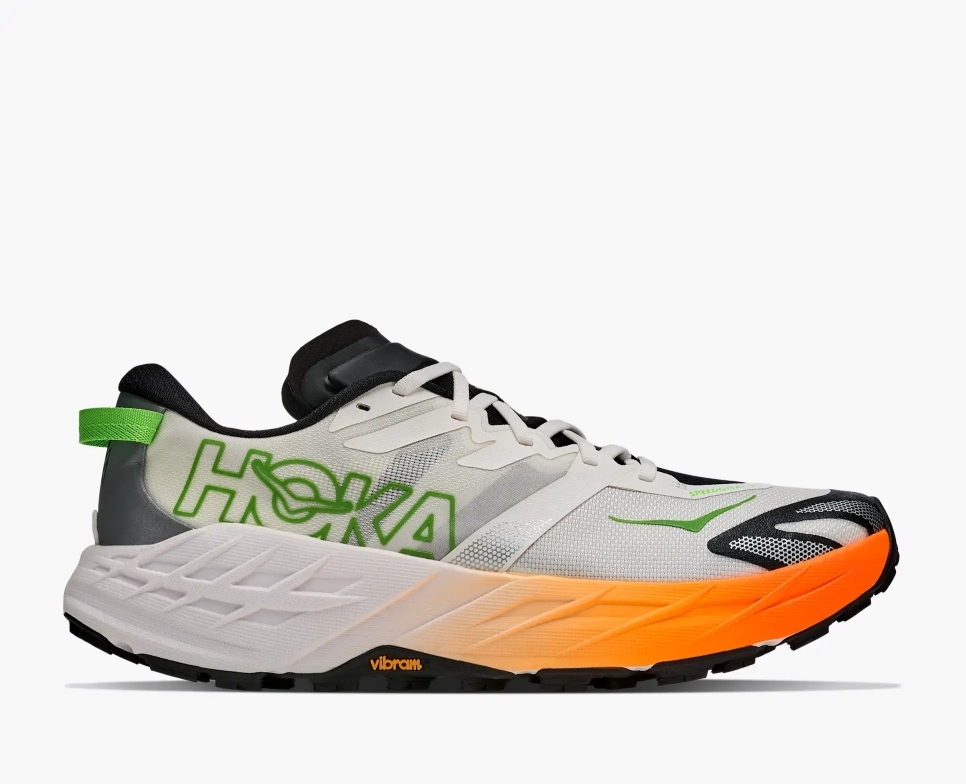
Specs:
- Weight: 9.7 oz (men's) / 8.3 oz (women's)
- Stack: 37mm heel / 32mm forefoot
- Drop: 5mm
- Upper: Woven textile
- Outsole: Vibram Megagrip, 5mm multi-directional lugs
- Price: $165
What changed: The biggest update is the midsole material itself (a first for this shoe) along with a redesigned upper that locks the heel down more securely than before, thanks to a padded collar, structured heel counter, and semi-gusseted tongue. The toebox is still narrow and tapered, so if you have a wider foot, it's worth trying a half size up.
Best for: Long trail runs, ultras, technical terrain, and anyone who wants one shoe that handles almost everything.
Not for: Wide or high-volume feet, or runners who want the most nimble, low-to-the-ground feel possible.
Challenger 8
This is the shoe for someone who runs mostly on roads and gravel but wants the option to wander onto a trail without switching shoes.
What it is: The Challenger has always been Hoka's road-to-trail crossover, and this version leans further into comfort with a taller stack and higher drop than before. Think of it as a trail shoe built by someone who mostly runs on pavement.
How it feels: This is a plush, forgiving ride from the first step, with shock absorption in the heel that's noticeably softer than the previous version. It's genuinely comfortable underfoot, and the extra room in the toebox (measuring above average in both width and height) makes it a good pick if you've found past Hoka trail shoes too snug. The upper also breathes well above the category average, so your feet stay cooler on longer efforts. It's not the liveliest ride on the market but for daily miles across a mix of surfaces, it does its job well and doesn't ask much of you.
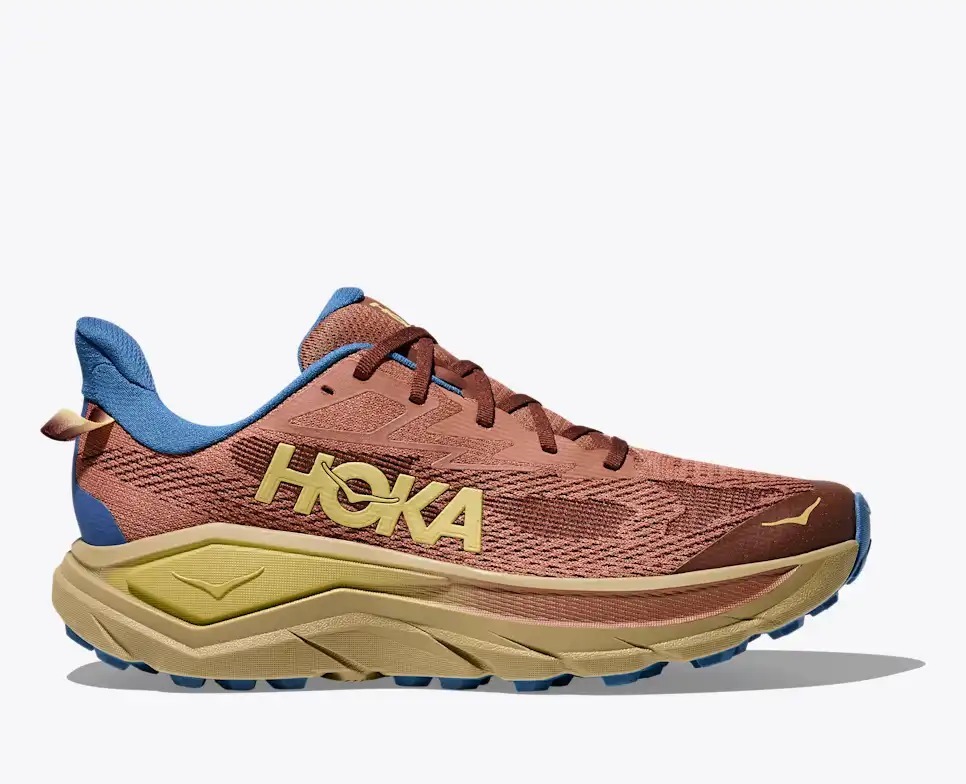
Specs:
- Weight: 9.7 oz (men’s) / 8.2 oz (women’s)
- Stack: 44mm / 36mm
- Drop: 8mm
- Upper: rPET jacquard mesh
- Outsole: Durabrasion rubber, 4mm lugs
- Price: $155
What changed: A taller stack, higher drop, and roomier fit compared to the previous version, plus a more breathable upper. It's a shoe that's clearly been tuned toward comfort over agility, though the added cushioning comes with a modest weight increase.
Best for: Runners who stick to pavement, gravel, and well-maintained trails, or anyone who wants one dependable shoe for mixed-terrain daily miles.
Not for: Wet rock, steep descents, or anything genuinely technical – save that for the Speedgoat.
Stinson 8
Think of this one as the Bondi's cousin for gravel roads and easy trails.
What it is: The Stinson has always been Hoka's maximalist stability shoe, and this version is the lightest one yet (roughly 30g lighter than its predecessor) while being a stability shoe. That weight loss comes from a refined CMEVA foam midsole, an updated lug pattern, and a lighter upper.
How it feels: This is about as protected and grounded as a trail shoe gets. The enhanced H-frame technology (dense foam running along the sides and across the midsole) combines with substantial sidewall flaring to create a "roll cage" feeling around the foot, making it a great option if you want a shoe that won't let your ankle roll on uneven ground. Interestingly, the platform is actually slightly narrower than the previous Stinson, giving it a more tapered, dynamic feel underfoot despite its stability-first design. The tradeoff is that it's a cushioned, protective ride rather than an energetic one – minimal ground feel and a smooth rolling sensation make it a shoe for easy miles, not tempo work. It also doubles nicely as a hiking or walking shoe. The midfoot and heel lockdown is notably secure too, thanks to a structured heel counter and integrated overlay system, while the toe box offers a roomy, comfortable fit.
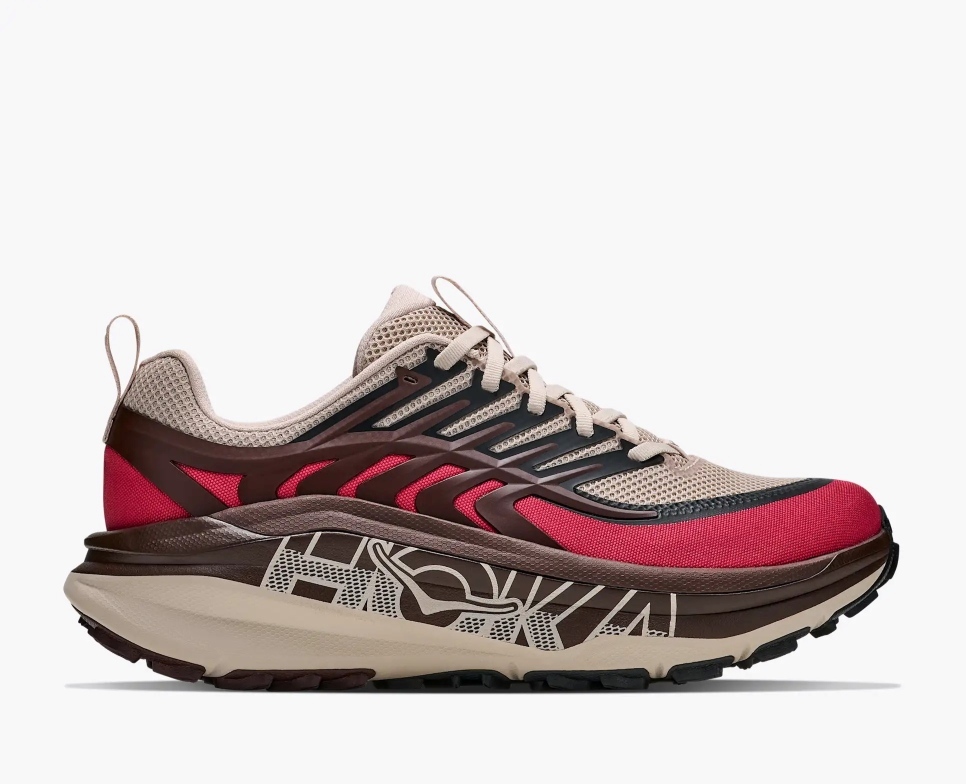
Specs:
- Weight: 11.3 oz (men's) / 9.6 oz (women's)
- Stack: 44mm / 39mm (men's); 43mm / 38mm (women's)
- Drop: 5mm
- Outsole: Durabrasion rubber, 3.5mm lugs
- Price: $180
What changed: The Stinson 8 is noticeably lighter than its predecessor, thanks to a refined midsole, updated lug pattern, and lighter upper.
Best for: Forest roads, easy trails, hiking, and all-day comfort.
Not for: Technical, rocky terrain — the wide platform and non-Vibram outsole aren't built for precision footwork there.
Mafate X
For long days on your feet where comfort matters more than speed, this is where the lineup gets serious about cushion and propulsion.
What it is: The Mafate X is Hoka's maximalist trail cruiser, built around a towering stack, a carbon plate, and an 8mm drop. With a 47.3mm heel stack and 36.7mm forefoot stack (well above the trail shoe average of roughly 33mm and 26mm) it's designed for the kind of ultra-distance efforts where pace takes a backseat to staying comfortable for hours on end. The trade-off of the cushioning is weight, obviously – the shoe sits in a 10 oz category.
How it feels: This shoe cushions like nothing else in the lineup, and its forked carbon plate adds a sense of structure and propulsion that keeps things feeling purposeful rather than mushy. The wide midsole footprint, measuring over 120mm at the forefoot, works with a Stinson-inspired construction that wraps soft PEBA foam in a supercritical EVA carrier, keeping your foot centered and secure. On buffed-out trails and gravel roads, it feels composed and confident. On more technical, uneven terrain, you'll want to watch your footing more closely, simply because of how tall the platform is – something worth keeping in mind if your runs involve a lot of rooty or rutted ground. The Vibram Megagrip outsole grips reliably on dirt, gravel, and even road, though its shallow lugs are built for smoother surfaces rather than loose or muddy ground. The woven mesh upper keeps things breathable despite the shoe's bulk.
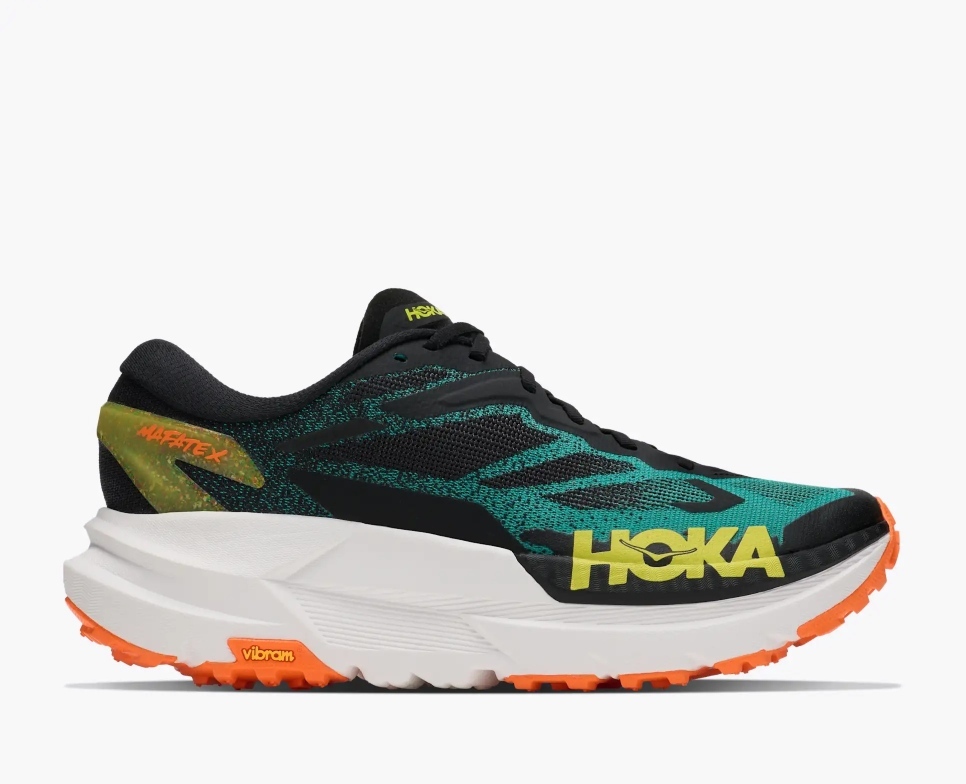
Specs:
- Weight: 12.1 oz (men's) / 10.3 oz (women's)
- Stack: 49mm heel / 41mm forefoot
- Drop: 8mm
- Midsole: PEBA and supercritical EVA with a forked carbon plate
- Outsole: Vibram Megagrip, 3-3.5mm lugs
- Price: $225
What changed: This is one of Hoka's boldest maximalist designs to date, pairing a huge stack with a carbon plate – a combination that's relatively new for the brand's trail lineup.
Best for: Ultra-distance training, long days on gravel and smooth trail, and heel strikers who like a higher drop.
Not for: Fast-paced racing or highly technical singletrack – that's where the Tecton X 4 comes in.
Tecton X 4
If the Mafate X is built for comfort over long days, the Tecton X 4 is built for the opposite: speed over demanding terrain.
What it is: This is Hoka's dedicated trail racer, built with a dual-layer PEBA midsole and parallel carbon plates designed to move with the terrain rather than fight against it, paired with a MetaRocker shape for a smooth forward roll. The Matryx Micro textile upper is breathable and quick-drying, with a stretchy "dynamic vamp" panel over the toe box that lets feet splay naturally as they swell over long runs. It's a shoe for people who are racing, not cruising.
How it feels: The parallel-plate design gives it a stable, planted feeling even on technical ground – a rare trait for a plated shoe, since the two plates move somewhat independently to adapt to uneven terrain instead of forcing a single rigid line through the foot. It grabs energy on climbs, provides confident traction on steep descents thanks to a Vibram Megagrip Litebase outsole, and stays efficient on flat, fast sections. This isn't a shoe that shines on easy, low-intensity days; it's tuned for effort and reveals its strengths when you push the pace.
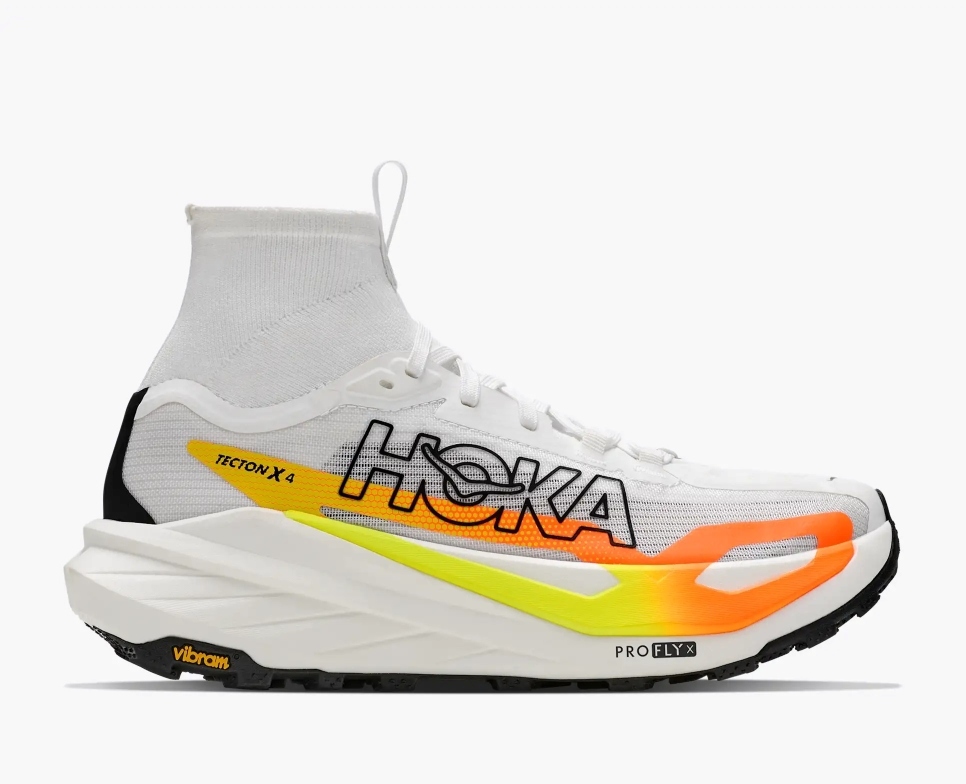
Specs:
- Weight: 9.7 oz (men's 10) / 8.3 oz (women's 8)
- Stack: 40mm / 35mm (men's); 39mm / 34mm (women's)
- Drop: 5mm
- Midsole: Dual-layer PEBA with parallel carbon plates
- Upper: Matryx Micro with integrated gaiter
- Outsole: Vibram Megagrip Litebase, 4mm lugs
- Price: $275
Best for: Racing, technical terrain at speed, and runners who want a plated shoe that still feels composed underfoot.
Not for: Recovery runs, casual hikes, or anyone looking for a daily trainer. If you like the idea of a plate but want something more versatile for everyday training, the Mafate X is the better fit – same propulsive feel, built for comfort over the long haul rather than race-day speed.
Head-to-heads
Speedgoat 7 vs. Challenger 8
If your runs are mostly technical singletrack (rocks, roots, loose terrain), the Speedgoat wins easily. Its Vibram Megagrip outsole has 5 mm lugs, and it has a locked-in fit that keeps your foot secure on uneven ground. That fit isn't especially wide, so runners coming from roomier brands may feel it in the forefoot, though a wide version is available. The Challenger 8 sits taller at 42 mm in the heel, versus 37 mm for the Speedgoat 7. It also has a higher 8 mm drop, compared with the Speedgoat's 5 mm, which will feel familiar to anyone coming from road shoes. On mixed routes that start at your front door, the Challenger's plusher ride feels more natural on the pavement stretches.
Choose the Speedgoat 7 if you run real trails most of the time. Choose the Challenger 8 if your runs mix pavement, gravel, and easy dirt.
Challenger 8 vs. Stinson 8
Both are road-to-trail shoes, but they lean in different directions. The Challenger is the nimbler of the two and feels more at home picking up pace, and its 8 mm drop suits runners coming from traditional road shoes. The Stinson trades some agility for extra cushion (44 mm at the heel) and a wide, stable platform, with a lower 5 mm drop. Its roomy toe box is a plus, though some runners find the heel fit a bit too wide. It works best on forest roads, gravel, and smooth trails rather than technical terrain.
Choose the Challenger 8 if you want one shoe for mixed runs at varied paces. Choose the Stinson 8 if you prioritize comfort on long, easy miles, gravel, and walking.
Speedgoat 7 vs. Mafate X
Both can handle ultra distances, but they suit different terrain. The Speedgoat is lighter at a claimed 9.7 oz, grippier, and far more agile on technical ground. The Mafate X is a different kind of shoe: 49 mm at the heel and 41 mm at the forefoot, a carbon plate, PEBA foam, and a claimed weight of 12.1 oz. Its lugs are 3.0 mm, better suited to gravel and groomed trails than steep, loose ground. The shoe tapers in the toebox, so you might want to size up (try it on if you can). Price is a factor too: the Mafate X costs $225, compared with $165 for the Speedgoat.
Choose the Speedgoat 7 if your ultra course is rocky, technical, or muddy. Choose the Mafate X if it's mostly gravel and forest road and you want maximum protection late in the race.
Mafate X vs. Tecton X 4
Both are carbon-plated, but they're built for opposite ends of the effort spectrum. The Mafate X prioritizes cushion and protection for long, steady days on smooth terrain. The Tecton X 4 is Hoka's trail racer. It pairs two layers of PEBA foam with parallel carbon plates that move independently, adding propulsion without taking away your ability to adapt to uneven ground. It's much lighter, at 9.7 oz in a men's 10, with a 40/35 mm stack and a 5 mm drop. It also includes an integrated gaiter and 4 mm Vibram Litebase lugs, so it handles technical terrain far better than the Mafate X. You might want to go up half a size, especially for long runs with steep descents. At $275, it's a race-day and key-long-run shoe rather than a daily trainer.
Choose the Mafate X for long training days and ultras on gravel and smooth trails. Choose the Tecton X 4 if you're racing, especially on technical ground.
A quick word on GTX versions
The Speedgoat 7 and Challenger 8 are both available in Gore-Tex versions, which add waterproofing at the cost of some breathability. These make sense if you run through wet, muddy, or cold conditions regularly – think winter trail miles or shoulder-season slop where dry feet matter more than ventilation.
They make less sense in hot weather or for runs involving stream crossings. Waterproof membranes work both ways - water that gets in during a crossing has nowhere to go, and you'll spend the rest of your run in a soggy shoe. If you run somewhere hot and dry, or your trails involve water crossings, the standard mesh versions will serve you better.
FAQ
Can you run on the road in Hoka trail shoes?
Yes, especially the Challenger 8 and Stinson 8, which are designed with road-to-trail versatility in mind. The Speedgoat and Mafate X can handle occasional road miles too, though their more aggressive lugs will wear faster on pavement and feel a little less efficient underfoot.
Which Hoka trail shoe is best for beginners?
The Challenger 8 is the easiest entry point for someone new to trail running, especially if most of your runs start or end on pavement. The Speedgoat 7 is a close second if you want more capability on rougher terrain from the start.
Do Hoka trail shoes run true to size?
It varies by model. The Speedgoat 7 and Tecton X 4 both run snug, and many testers recommend sizing up half a size. The Challenger 8 and Stinson 8 tend to fit closer to true to size, with roomier toeboxes.
Which Hoka trail shoe is most like the Clifton or Bondi?
The Stinson 8 is the closest match to the Bondi's cushioned, easygoing character, just built for gravel and light trail instead of pavement. The Challenger 8 sits closer to the Clifton in feel – lighter and a little more nimble.
Is the Speedgoat good for hiking?
Yes, especially for fast, light hiking. The Speedgoat 7's 5 mm Vibram Megagrip lugs handle wet rock, steep climbs, and loose ground well, and the GTX version adds waterproofing. Just note that the fit is snug through the forefoot. For smooth trails and gravel, the Stinson 8 offers more cushion and a roomier toebox. For boot-like support, Hoka's dedicated hiking shoes are a better fit. The Kaha 3 GTX is the most supportive option for rough terrain and heavier packs. The Anacapa 2 is a lighter, versatile pick for day hikes. The Transport Hike suits casual walks and easy trails.
EXPLORE POPULAR ARTICLES
-

12 Running Tips That Actually Make a Difference
Sep 30th 2026Whether you're chasing your first 5K or your tenth marathon, these 12 habits will help you run stron
-
![Hoka Trail Shoes Compared [2026 Guide]](https://cdn11.bigcommerce.com/s-eeul26hjka/images/stencil/160w/uploaded_images/hoka-trail-shoes-compared.jpg "Hoka Trail Shoes Compared [2026 Guide]")
Hoka Trail Shoes Compared [2026 Guide]
Sep 28th 2026Here, we explain and compare most popular Hoka trail shoes. By the end of this guide, you'll know wh
-

ASICS GEL-Nimbus 28 Review: Who It's Actually For
Aug 24th 2026In this post, we explain what and who the ASICS Nimbus is made for as well as how it compares to the

