
12 Running Tips That Actually Make a Difference
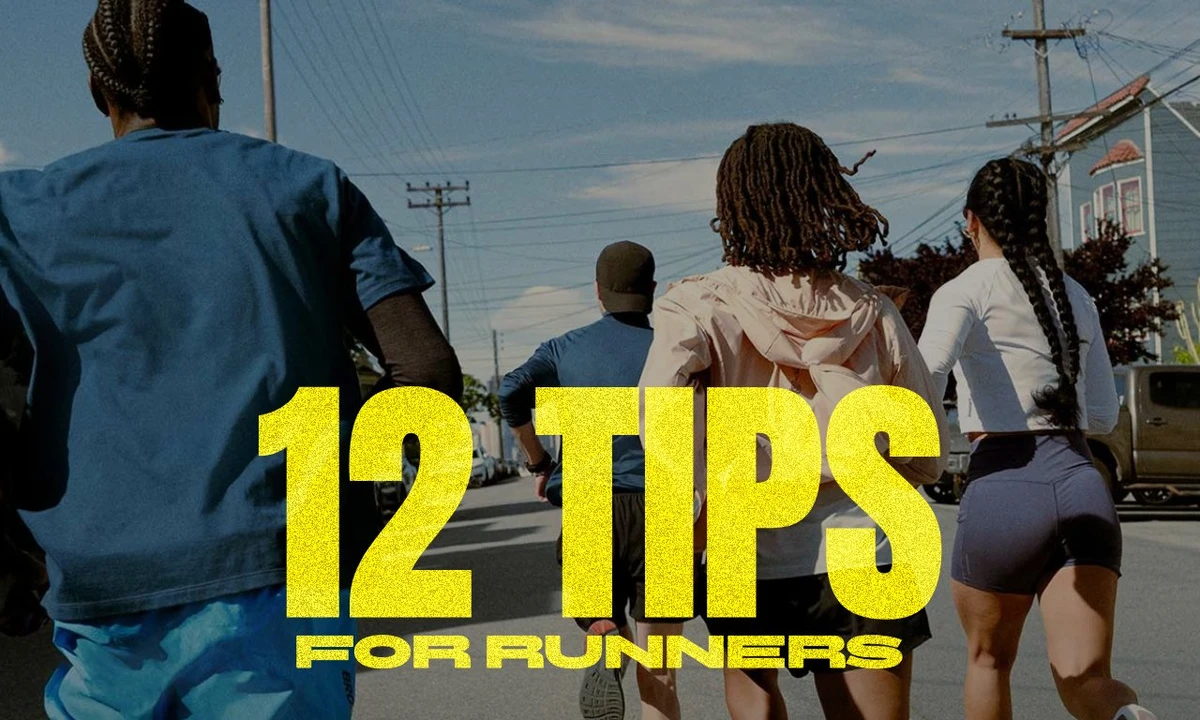
Whether you're chasing your first 5K or your tenth marathon, these 12 habits will help you run stronger, dodge injuries and actually have fun. Some are about training, some are about gear, and a few are about getting your head right, because let's be honest, that's where most "I can't" moments come from.
Tip 1: Lift weights, not just miles
If there's one piece of advice we'd give runners at any level, it's this: mix your runs with strength training. 3 runs plus 2-3 strength workouts a week is a solid formula.
Add 1 rest day too – yoga, swimming, stretching, sauna – all are great for the body and for the mind. Of course, there’s always an option of parking yourself on a couch and lying guilt-free.
And by strength training, we don't mean bodyweight circuits but rather machines under load or free weights you actually increase over time. Don't get too comfortable with the same dumbbells week after week; progress means adding weight.
Strength work builds your core, quads, glutes and hamstrings, which lowers your risk of running injuries and overuse issues (especially if your mileage sneaks up too fast). Strong quads absorb the impact of landings and help protect your knees, while your glutes and hamstrings drive you forward.
Give Bulgarian split squats a shot: they hammer your quads and glutes one leg at a time, just like running does. Then don't skip your hamstrings, they're usually the weak link for runners, so add Romanian deadlifts, Nordic curls, and Leg curls. Skip the running drills if you're pressed for time, but strength training? That one's non-negotiable.
Tip 2: Bad weather is not an excuse
A rainy forecast isn't a reason to skip your run, or shelve running until spring rolls around. You've got two options: hit the treadmill, or embrace running in the rain. After a brutal summer of heat, running in the rain can feel downright refreshing.
The treadmill is good if you're short on time. If you're following Tip 1, you've already got a gym membership and a row of treadmills waiting for you, so don't write them off, especially if you've been dealing with injuries or overload. You can set an incline you can still run comfortably at and build your endurance. Uphill running can be used for strengthening the tendons and ligaments around your knee.
If you'd rather brave the elements, choose your shoes carefully. Trail shoes with a waterproof membrane do exist, and some road running models come in both regular and GTX (Gore-Tex) versions. Still, waterproof shoes aren't always the best idea for running: once water gets in over the collar, they take much longer to dry out.
For many runners, a regular pair treated with a special waterproofing spray is a good compromise, and it's a cheap way to test your willpower the first time out.
Waterproof running apparel is a real thing, though.
Tip 3: Your long run is not a recovery day
If you're cruising at a low heart rate and an easy pace, your cardio system isn't working too hard. But your muscles, joints and tendons are still taking a beating: all those leg swings, cadence shifts and time spent pounding the pavement add up.
Never skip your warm-up on a long-run day, and never make a single run more than 10% longer than your longest run in the past month. Sudden jumps in distance are a fast track to overuse injuries in the knee, the ankle, or wherever you've been hurt before. The chain always breaks at its weakest link.
Recover the right way after long runs. Hang from a pull-up bar when you're done, do an easy cool-down, and finish with some gentle static stretching or mobility work ( dynamic stretching is better for your warm-up). Ideally, the day after your long run is a rest day, so treat yourself to a massage, hop in the pool, sit in the sauna, or just take the day off from everything.
Read more: Recovery Shoes and Orthotics: How to Choose and Use Them
Tip 4: Run safe
The treadmill is the safest type of run (and most weatherproof). The injury risk is lower: no tree roots, no dogs, no traffic.
If you're craving fresh air and a change of scenery, plan routes where you're easy to spot: near streetlights, on pedestrian paths, at a track, close to security cameras. Nature is gorgeous, but steer clear of deserted woods, empty parks, and private property with guard dogs on patrol.
For early-morning or evening runs, especially in rough weather, throw on reflective shoes and apparel so drivers can see you coming. If daytime heat forces you out at night, bring a solid flashlight or headlamp. A small personal alarm clipped to your running belt can also scare off trouble and grab attention fast. We've also got self-defense sprays in our store if you want extra peace of mind (check local rules on self-defense sprays).
Read more: Reflective Gear for Night Running
Tip 5: Watch your heart rate
It might sound boring but most of your running progress comes from spending the bulk of your training in Zone 2 – that’s conversational pace. A good fitness tracker allows you to see your heart rate in real time and get a read on how well you've recovered.
If you're a fairly experienced runner, the talk test works great for checking your effort on the fly. But without a modern sports watch, it's tough to catch early signs of overtraining. If your resting heart rate creeps above its usual baseline, that's your cue to dial back the workout or swap it for something easier.
Tip 6: Take care of your feet and ankles
A classic problem for new and intermediate runners alike: that first bout of plantar fasciitis, usually showing up right when you start running or ramp up your mileage too quickly. Worth saying again, never add more than 10% to your long-run distance.
Prevention starts with strong feet and lower legs. Your calves, ankles and the small muscles of your feet absorb a huge share of the load on every stride. Add calf raises (slow, controlled, and eventually on a step with extra weight), single-leg balance work and toe exercises like towel scrunches to your strength routine. Regular calf stretching helps too, since tight calves put extra strain on the plantar fascia.
Any discomfort that doesn't fade within a week after running, and especially pain that gets worse over several days, is a reason to see a doctor. But if you've already had plantar fasciitis, your feet and heels need extra attention: rolling with a foam roller or massage ball, massagers, targeted exercises and supportive accessories.
During a flare-up, never walk barefoot, and make sure your slippers absorb shock well. At night, a compression sleeve or a night splint keeps the fascia gently stretched while you sleep, which helps with that painful first step in the morning. During the day, socks designed for plantar fasciitis (look for "PF" on the label, from brands like OS1st and Feetures) can give your arch extra support. Think of these accessories as helpers alongside exercise and smart training, not a cure on their own.
Read more: Why Running Socks Are the Best Gift
Tip 7: Learn to distract your brain
"I can't run any farther." "I'm exhausted." "I can't do this." Most of the walls you hit on a run are mental, not physical. The good news is that you can train your head just like you train your legs.
Build a playlist packed with songs you actually love. Dance a little, sing along (bonus: that doubles as a breathing check), wave your arms around like nobody's watching.
When things get tough, have a few tricks ready.Mentally break the run into small chunks: tell yourself you only need to make it to the next lamppost, or to the end of this song, then pick a new target. Or turn your attention to your form, your arm swing and your breathing, instead of how far you still have to go. Build little routines and habits that pull your head out of the pain cave when you feel like you're running on empty.
One more thing if music is your go-to: pick open-ear or bone-conduction headphones. They let you hear traffic, cyclists and other runners, which keeps you safe on the road.
Read more: Bone Conduction Headphones vs. Open-Ear Earbuds: Are They Worth It?
Tip 8: Rotate your shoes, and never race in a new pair
Keep a few pairs of running shoes in rotation, each with its own job. A well-cushioned pair might be perfect for long runs. A lighter, more responsive pair with extra energy return is made for speed work: intervals, tempo runs and fartleks. And a sturdy hybrid shoe that feels too heavy for road racing can be ideal for easy runs on mixed terrain and short trails.
Which pair works best for which session is personal. Review sites like RunRepeat give a solid rundown of specs, but your own mechanics, like your pronation, foot strike and push-off, tell a real story. Sometimes a completely unremarkable shoe becomes your absolute favorite. It happens.
One rule applies no matter what's in your rotation: never race in brand-new shoes. Save race day for a pair you've already put real miles in. Otherwise you're asking for black toenails and blisters in places you didn't know could blister.
Read more: Pronation Guide for Runners: At-Home Test and Best Picks
Tip 9: Balance social runs with solo workouts
Group runs are one of the best parts of running. They connect you with a community, the shared passion helps prevent burnout, and some days the group is the only thing that gets you out the door.
But let's be honest: in a group you usually run the group's pace, not yours. If you're new, that's often too fast. If you're more experienced, it's often too slow for the workouts that actually move your times forward.
So keep your group runs, just don't let them outnumber your solo runs. Once you're past the beginner stage and want to get faster, do your key workouts on your own, at your own pace, and save the group for easy miles and good company.
Read more: Join the RunUnited Community
Tip 10: Don't forget to refuel
Hydration first. For short, easy runs in mild weather, most runners do fine without carrying water. But once you're heading out for longer than 45-60 minutes, or the thermometer is climbing, bring something to drink. On long runs and hot days, an electrolyte drink or salt tabs are the way to go. You lose a lot of sodium and other electrolytes when you sweat heavily, and your body relies on them to keep your fluid balance in check and your muscles and nerves firing properly. Low electrolytes can show up as cramps, dizziness or that sudden "empty" feeling mid-run.
Next, food. An easy morning jog on an empty stomach is fine for many runners. For long runs, hard workouts and races, though, carbs are the foundation of feeling good on the run. Eat a carb-rich meal or snack beforehand, and give yourself time to digest. Try different gels, bars and chews one at a time until you find what sits well with your stomach. You might even prefer homemade date-based energy bars or balls.
On long runs and races, the glycogen stored in your muscles and liver starts running low after roughly 60 to 90 minutes of hard running. That's why fueling during the run matters. A good rule of thumb is to aim for about 30 to 60 grams of carbs per hour. Take your first gel around 30 to 45 minutes in, then keep going every 30 to 45 minutes. Since the schedule is based on time, it works no matter your pace.
Check the label, because carb content varies a lot between gels, and some runners need more (or less) than others. Practice your fueling on training runs so your gut gets used to it.
Stop by our store and pick up single gels to test. Already have favorites? Stick with them, and never experiment on race day. Bring what your body knows.
Tip 11: Sunglasses aren't just for sun
Sure, sunglasses look cool. But think of them first as protection. Runners spend hours outside, and all that UV exposure adds up. Over time it can raise your risk of cataracts and other eye problems, and even a single long run in bright sun, on the beach or on snow can leave your eyes sore and irritated. Look for lenses that block 100% of UVA and UVB rays (often labeled UV400).
UV isn't the only thing they block. It can seem like runners today pile on way too much gear, from wild shorts to neon calf sleeves and arm sleeves. But the longer you're in the game, the less unnecessary it all feels. Sunglasses have saved us from watery eyes and from gusts of wind carrying some seriously big bits of dust and grit. They block heavy pollen when the trees are blooming. And, maybe worst of all, they stop a bug from flying into your eye, especially at speed.
We recommend lightweight frames designed specifically for running. They stay put without bouncing or sliding down a sweaty nose. Polarized lenses cut glare from wet roads and water. Photochromic lenses adjust as the light changes, so they're handy for early starts or runs that move between sun and shade. Finding your perfect pair can be tough, so we hope our guide helps.
Read more: Best Sunglasses for Running: A Complete Buyer's Guide
Tip 12: Treat yourself
Dress up, and not just for race day. A bright long-sleeve or a wild print on your shorts or cap really does give you a boost. It helps at dawn, when you're seriously questioning whether this darn run is worth it.
Then, out on the road, your bold outfit might just brighten someone else's day too. Who knows, maybe you're the one who inspires a grumpy neighbor to move more, or the guy at the bus stop to finally quit smoking.
Feeling stuck in a rut? Treat yourself to something small and fun: new socks, a bandana, a cap or a colorful waist pack. Enough with the all-black!
Shop more: Bloom & Move collection
Read more: Best Gifts for Runners
EXPLORE POPULAR ARTICLES
-

12 Running Tips That Actually Make a Difference
Sep 30th 2026Whether you're chasing your first 5K or your tenth marathon, these 12 habits will help you run stron
-
![Hoka Trail Shoes Compared [2026 Guide]](https://cdn11.bigcommerce.com/s-eeul26hjka/images/stencil/160w/uploaded_images/hoka-trail-shoes-compared.jpg "Hoka Trail Shoes Compared [2026 Guide]")
Hoka Trail Shoes Compared [2026 Guide]
Sep 28th 2026Here, we explain and compare most popular Hoka trail shoes. By the end of this guide, you'll know wh
-

ASICS GEL-Nimbus 28 Review: Who It's Actually For
Aug 24th 2026In this post, we explain what and who the ASICS Nimbus is made for as well as how it compares to the

