
Pronation Guide for Runners: At-Home Test + Best Picks
Understanding how your foot moves is one of the most practical things you can do before buying your next pair of running shoes. This guide breaks down pronation types, explains how to identify yours at home and gives you clear direction on what running shoes actually match your foot mechanics.
SHOP: MEN'S RUNNING SHOES | WOMEN'S RUNNING SHOES
What Is Pronation?
Pronation is the natural inward rolling motion your foot makes as it contacts the ground. It's your natural shock-absorption mechanism. Your heel strikes > foot rolls slightly inward, the arch slightly flattens > impact force gets dispersed across the foot rather than sending it straight up through your joints.
The question is how much of the rolling is happening. The degree of that motion determines your pronation type. Extremes change the way force travels up your foot, ankle, knee, and hip during your stride.
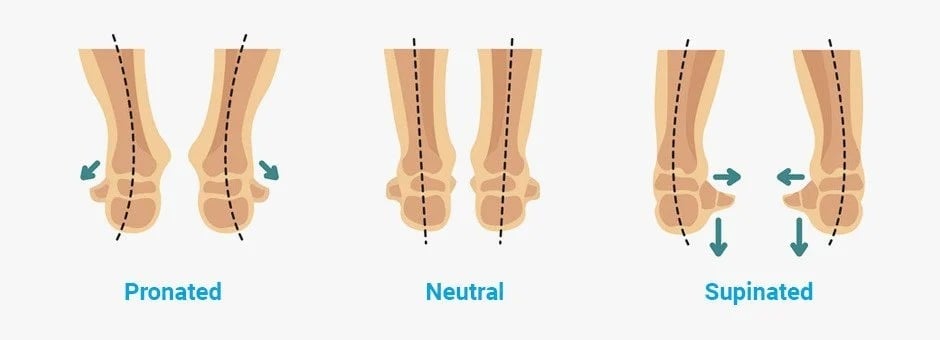
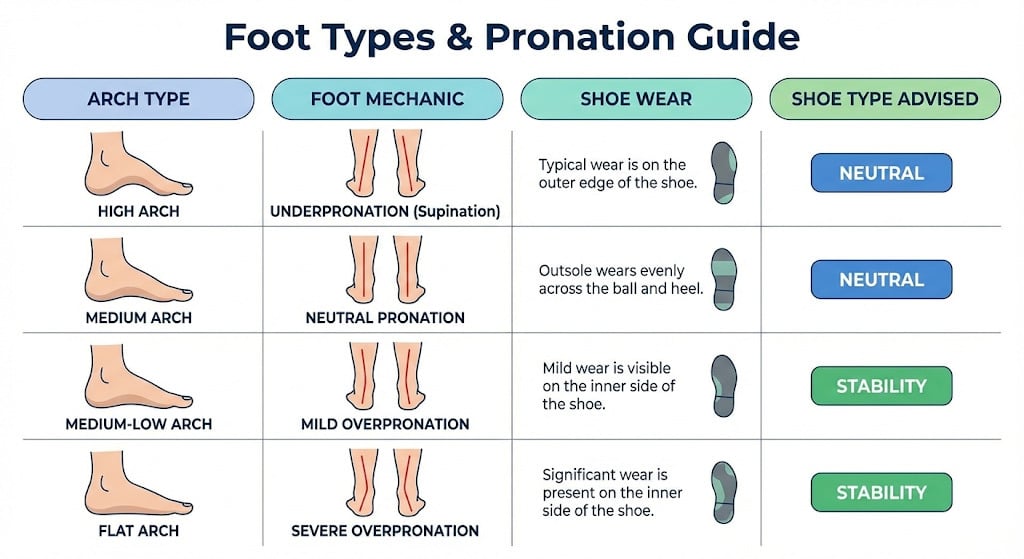
Pronation Types: Neutral, Overpronation, Supination
Neutral Pronation
Your foot rolls inward roughly 15 degrees after heel strike. The arch lowers just enough to absorb shock efficiently, then your weight transitions smoothly toward the ball of the foot and off the big toe. This is the most biomechanically efficient pattern. Your leg stays well-aligned, impact forces are distributed evenly, and injury risk from alignment issues stays relatively low.
Injuries can still happen, but they're usually related to training load rather than structural misalignment.
Overpronation
The foot rolls inward past the neutral range. Instead of weight transferring to the ball of the foot, the arch collapses further and the ankle rolls medially. This shifts load to the inner edge of the foot and big toe, pulling the shinbone inward and creating a chain of misalignment that runs up the leg.
Common foot types: Flat feet, low or flexible arches
Typical injuries: Plantar fasciitis, shin splints, medial knee pain, bunions, heel spurs, lower back discomfort
Overpronation can stem from genetics (some people are simply born with flat feet) but tight calves, stiff ankles, weak foot muscles, and increased body weight can all contribute or worsen the pattern over time.
Underpronation / Supination
The foot doesn't roll inward enough after landing. Weight stays on the outer (lateral) edge of the foot, reducing the foot's ability to absorb impact naturally. The ankle tends to roll outward, and force travels up the lateral side of the leg rather than dispersing across the foot.
Common foot types: High, rigid arches
Typical injuries: IT band syndrome, stress fractures, outer ankle sprains, shin splints, plantar fasciitis
Supination is mostly genetic. High, rigid arches don't flatten easily, so the foot simply can't complete the inward rolling motion the way a lower arch would.
How to Find Your Pronation Type: At-Home Tests
Fortunately, most people don't need a clinic or a treadmill camera to get a reasonable read on your gait and pronation in particular. Three simple at-home checks, used together, give a pretty solid picture.
Old Shoe Test
Take a pair of running or walking shoes with at least 3-6 months of regular use, turn them over and look at the soles.
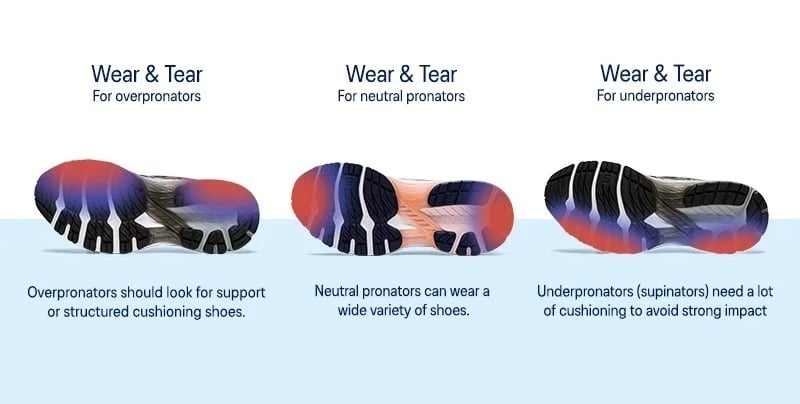
- Wear mostly on the outer edge → likely underpronation
- Wear spread fairly evenly across the forefoot and center heel → likely neutral
- Wear concentrated on the inner edge and big toe area → likely overpronation
Then place the shoes on a flat surface and look at them from directly behind:
- Slight outward tilt → underpronation
- Stands straight → neutral
- Significant inward collapse → overpronation
Wet Foot Test
Wet the sole of your foot and step firmly onto a piece of cardboard or dry concrete, step off and examine the print.
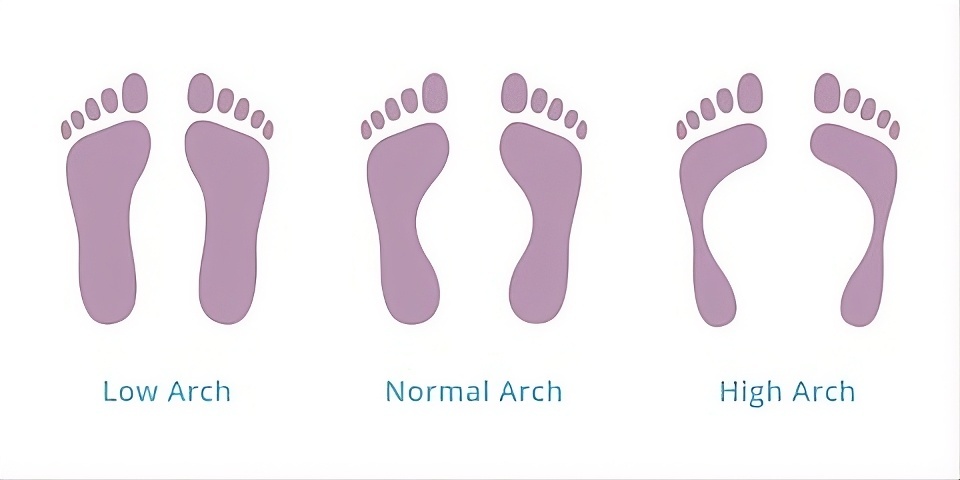
- Very thin connecting band between heel and forefoot (or no connection at all) → high arch, likely underpronation
- Visible curve with a connecting band roughly half the width of your foot → normal arch, likely neutral pronation
- Near-complete footprint with minimal inward curve → flat/low arch, likely overpronation
Note: If your footprint looks flat but your arch reappears when you stand on your toes or sit down, your flat feet are weight-bearing only, which is flexible. If there's still no arch, you're dealing with a structurally flat foot. This distinction matters when selecting insoles and orthotics. Flexible low-arched feet often do better with a medium arch support rather than a low one.
Body Awareness Check
Think about where you tend to feel pain or tightness after longer runs or walks.
- Outer ankle, outer knee, or lateral shin pain: Consistent with underpronation
- Inner knee, arch pain, or lower back discomfort: Consistent with overpronation
- No recurring alignment-based pain: Consistent with neutral pronation
Also notice your knees when you stand naturally. Knees that drift inward suggest overpronation; knees that stay straight or bow slightly outward are more consistent with supination.
Quick Pronation Questionnaire
Q1. Where is the most significant wear on your shoe soles?
- A. Mostly on the outer edge (pinky-toe side)
- B. Distributed evenly across the ball and center heel
- C. Mostly on the inner edge and under the big toe
Q2. Place your shoes on a flat table and look from behind. Do they lean?
- A. Slight outward tilt
- B. Standing mostly straight
- C. Collapsing inward
Q3. What does your wet footprint look like?
- A. Very thin line or no connection between heel and forefoot
- B. Clear inward curve, connecting band about half the foot's width
- C. Wide, solid print showing most of the sole
Q4. Where do you most often feel pain or tightness after a long run or walk?
- A. Outer ankle, outer knee, or lateral shin
- B. No recurring alignment-related pain
- C. Inner knee, arch, or lower back
Q5. When standing naturally, your knees tend to:
- A. Stay straight or bow slightly outward
- B. Stay aligned directly over your feet
- C. Turn slightly inward toward each other
Your Results
Mostly A's - Underpronator (Supinator)
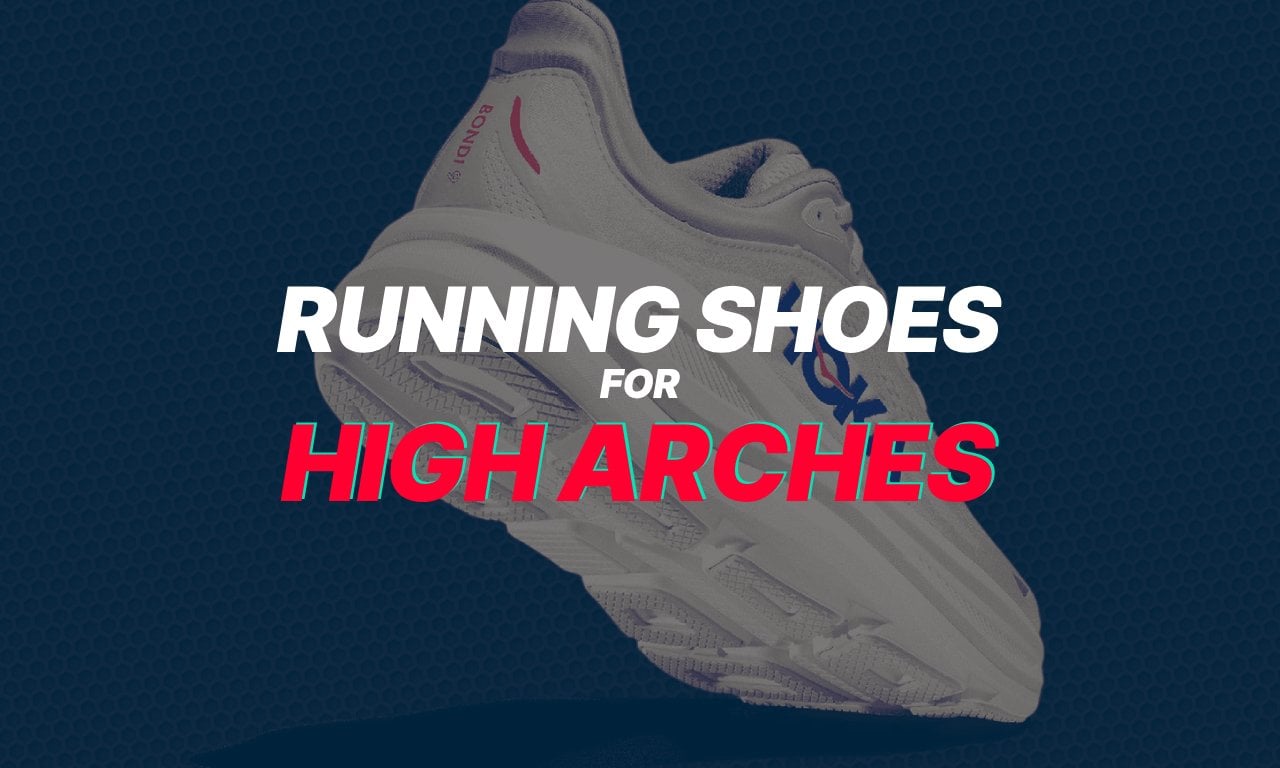
Your foot has a high, rigid arch that doesn't roll inward enough to absorb shock well. You need shoes that compensate with serious cushioning.
What to look for: Neutral shoes with maximum cushioning, flexible soles, and extra padding on the outer edge to prevent the foot from rolling further outward. Avoid stability and motion-control shoes entirely! The medial support built into stability running shoes pushes your foot further onto the outer edge where the weight already concentrates.
Recommended options: Hoka Bondi, Brooks Glycerin, Topo Atmos
Read:
Mostly B's - Neutral Pronator
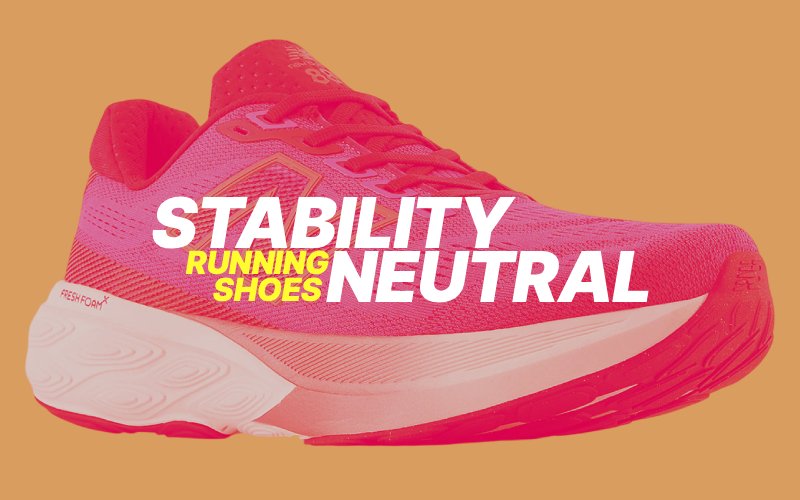
Your foot rolls inward just enough to handle impact efficiently. You have the most flexibility when it comes to shoe choice, but that doesn't mean anything goes.
What to look for: You don't need corrective support, but you do benefit from a well-cushioned, responsive shoe that works with your natural movement rather than interfering with it. Look for daily trainers that balance cushioning with some ground feel and forward momentum.
Recommended options: Brooks Ghost, Hoka Clifton, Topo Phantom
Read:
Mostly C's - Overpronator
Your arch collapses further than it should on impact, shifting load onto the inner foot and creating misalignment up the leg. The more pronounced the overpronation, the more structured support you need.
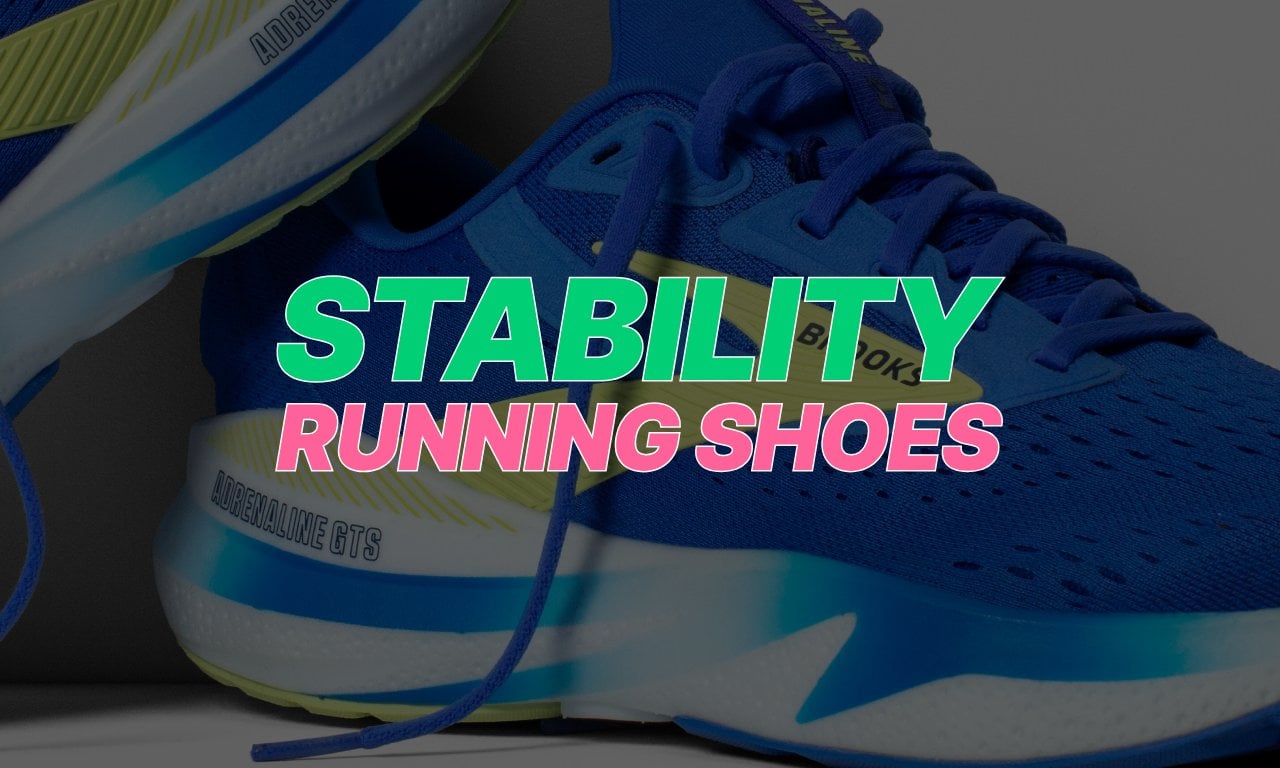
What to look for: Stability shoes with medial support built in. For mild overpronation, a well-structured neutral shoe (aka neutral stability shoe) may be enough. Moderate overpronation calls for a proper stability shoe. Severe cases often benefit from a specialist assessment, and custom orthotics may be worth considering.
Here is a rundown of the stability features:
- Medial posts (various brands): A denser section of foam on the inner midsole that resists arch collapse
- Brooks GuideRails: Foam rails on both sides of the heel that reduce both inward rolling and excessive outward motion. Brooks GTS models (Adrenaline GTS, Glycerin GTS) all use this system
- Hoka J-Frame and H-Frame: Shaped sections of denser foam that wrap around the heel or form a figure-8 structure for a stable but cushioned ride
- Mizuno Wave Plate: A structural plate running through the midsole that prevents arch collapse while maintaining forward momentum
- Asics 4D/3D Guidance Systems: Combines elements like an increased heel bevel, wider base, sculpted midsole, and medial post for layered support
Wider bases, stiff heel counters, and structured midsoles are additional features to look for - they all contribute to a more planted, controlled landing.
Recommended options: Brooks Adrenaline GTS, or Brooks Glycerin GTS, Hoka Arahi, Asics GT-2000, Topo Aura, Saucony Guide
Read:
⚠️ Disclaimer: This questionnaire is for general informational purposes. At-home tests are useful screening tools, but they don't replace a professional gait analysis. If you're dealing with persistent pain, recurring injuries, or structural concerns, consult a podiatrist or orthopedic specialist for a proper assessment.
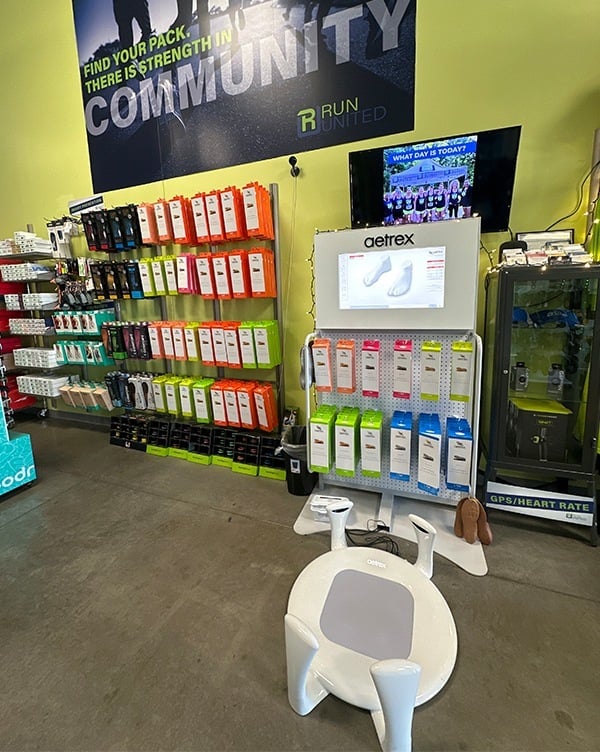
Visit RunUnited store for Professional Gait Analysis
RunUnited is committed to helping you find the right pair. By using 3D technology, we offer an in-depth analysis of your arches, width, instep, and even pressure that can cause discomfort. Our expert staff will then fit you with the appropriate shoes for your foot type and activity, whether a marathon or simply a comfortable pair of shoes for work.
LEARN MORE ABOUT OUR GAIT ANALYSIS
A Few Things to Keep in Mind
The tests above are screening tools, not clinical assessments. They're useful for narrowing down where you sit on the pronation spectrum and giving you a starting point for shoe selection - but they have real limits.
If you have ongoing foot or leg pain, reduced mobility, or a history of stress fractures or plantar fasciitis, a proper gait analysis from a podiatrist or physical therapist is worth the appointment. A specialist can assess muscle imbalances, range of motion, and movement patterns that no wet footprint or worn shoe sole can reveal.
Also worth noting: pronation-based shoe prescription isn't the whole picture. Research increasingly shows that comfort matters enormously when selecting footwear - a shoe that technically matches your gait but feels wrong on your foot is unlikely to serve you well. If you're a mild overpronator with no injury history, you may run fine in a well-cushioned neutral shoe. Your body often gives good feedback if you pay attention to it.
Strengthening the muscles that support foot alignment (particularly the intrinsic foot muscles, calves, and hip abductors) can reduce the severity of both overpronation and supination over time, regardless of what's on your feet.
EXPLORE POPULAR ARTICLES
-

Run United Named the Best Texas Running Store of 2026
Apr 9th 2026BusinessRate has officially named our store the Best Texas Running Store of 2026. This recognit
-

Pronation Guide for Runners: At-Home Test + Best Picks
Feb 27th 2026Understanding how your foot moves is one of the most practical things you can do before buying your
-