
Get Ready for UIL Track Season: A Prep Guide for Texas Athletes

If you are a parent or an athlete preparing for the University Interscholastic League (UIL) season, you might think you have plenty of time to grab gear. But think again! If you are waiting too long to buy track spikes, you are likely going to run into two major problems: sold-out inventory and blistered feet during your first meet. But for now, you have a window to get fit, get legal, and get comfortable in your equipment.
Here is your guide to navigating the 2026 UIL season, specifically tailored for track and field athletes in competitive Texas districts.
Why You Need to Buy Spikes in Early February
Many beginner athletes wait until the first big meet to buy their competition shoes. In Texas, that usually aligns with the lead-up to the Texas Relays (scheduled for April 1-4, 2026). The problem is that by late March, inventory across the state is often wiped out. You don’t want to be the athlete stuck with a colorway you hate or a size that’s a half-size too big just because everything else was sold out.
Buying in late January or early February gives you a strategic advantage. You get first pick of the inventory, but more importantly, you get time. You need 2-3 weeks to properly break in a stiff pair of sprint spikes. So by purchasing now, your spikes will be molded to your feet by the time the gun goes off for your first real competition.
Choosing the Right Running Spikes for Track & Field
You wouldn't wear a baseball cleat to play soccer, and you shouldn't wear a 100m sprint spike to run the 2-mile. Here is how to pick the right option from our current stock.
For the Sprinters (60m-400m & Hurdles)
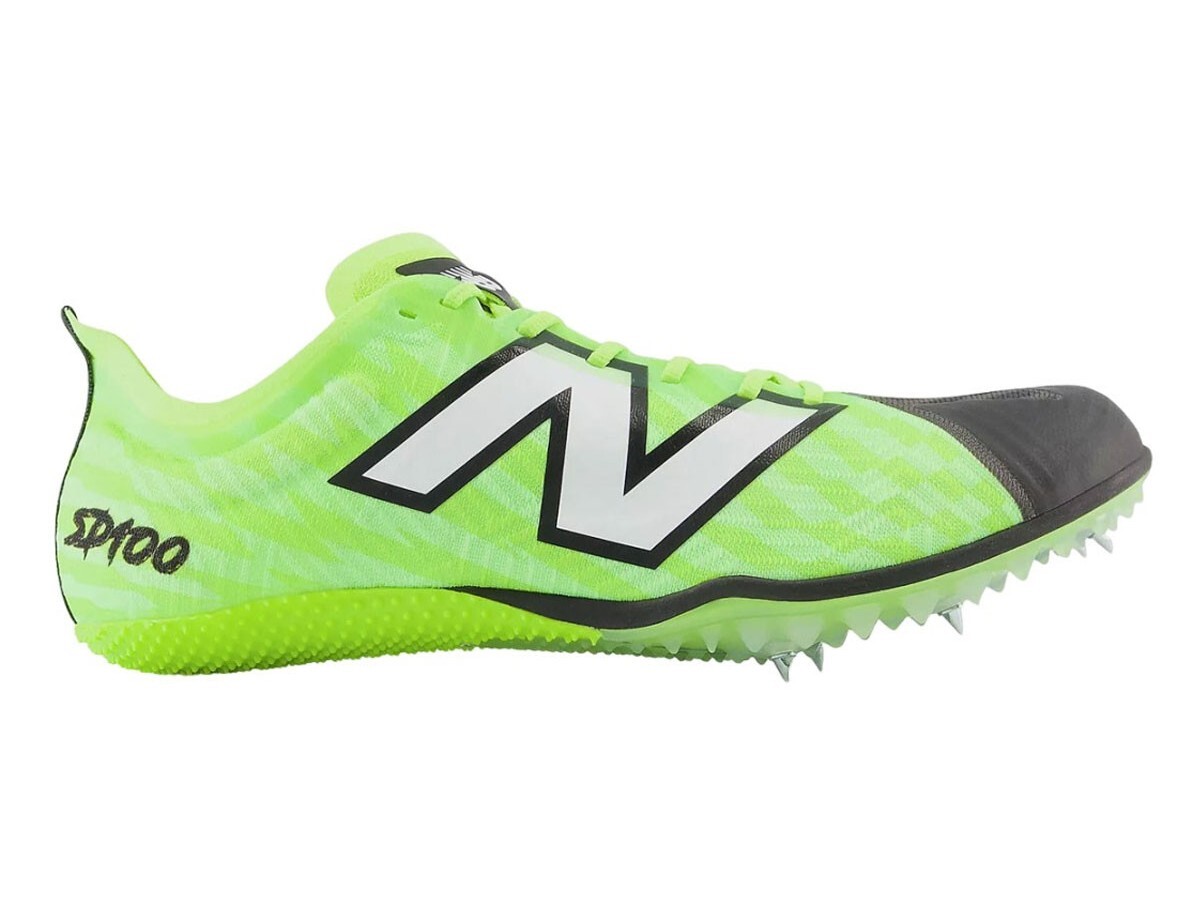
You need stiffness. The goal here is power transfer. A dedicated sprint spike, like the NEW BALANCE FuelCell SD100 v5, uses a hard plate under the forefoot to keep you on your toes. It’s aggressive and minimizes the time your foot spends on the ground. These are perfect for the 100m, 200m, 400m, and hurdles. Just remember: they aren't built for comfort; they are built for speed.
For the Middle Distance & Multi-Eventers (400m-800m-1600m)
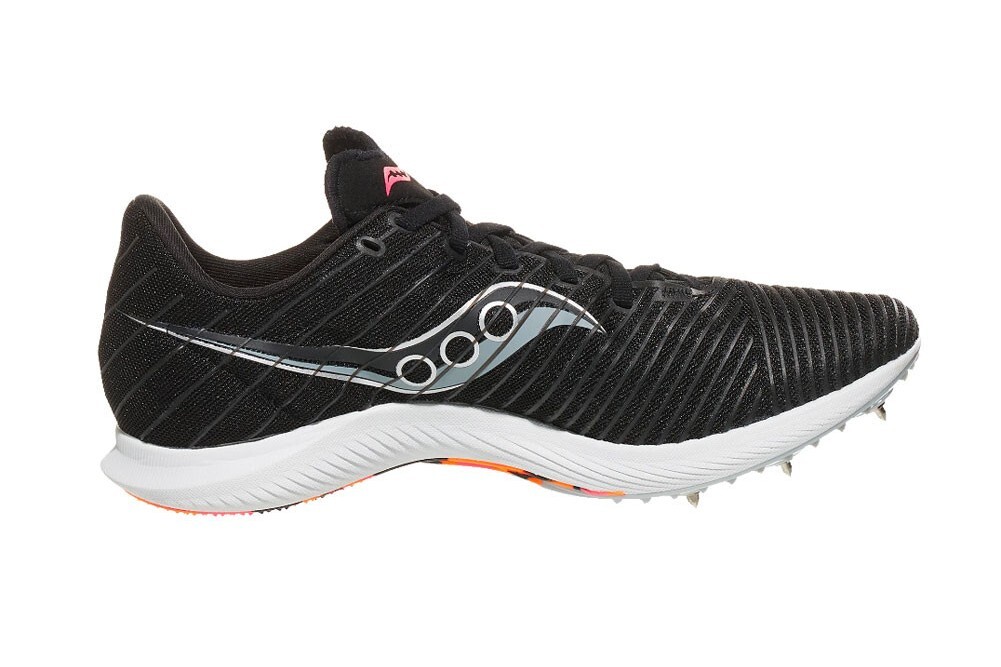
If you are the utility player running a 400m leg on the relay and then turning around to run the 800m open, you need a hybrid. You want a plate that has some "pop" for speed, but enough heel cushioning to get you through two laps without bruising your bones. A shoe like the SAUCONY Velocity MP Men's / Women's fits this gap perfectly. The NEW BALANCE FuelCell SD100 v5 is another excellent, fully UIL-legal choice that balances speed with a propulsive feel.
For Distance (1600m–3200m)

High school distance runners often prefer a bit more protection. You are pounding the track for eight laps, and pure track spikes can be harsh on the calves and feet. Shoes categorized as XC/LD (Cross Country/Long Distance), such as the BROOKS Draft XC or HOKA Crescendo XC as well as HOKA Cielo X LD and Cielo X 2 LD, trade a little bit of that raw, stiff speed for comfort. They cushion the impact, which helps keep your legs fresh for the last lap kick. (Hoka Crescendo is available in a spikeless version for practice or hard surfaces).
Note: West Texas regional meets are often remembered for big tailwinds on some straights and brutal headwinds on others. If you are doubling or tripling events in those conditions, fatigue sets in fast. In this specific scenario, a mid-distance spike shoe with a slightly thicker midsole (like the Hoka Unisex Crescendo MD) can be a lifesaver. It absorbs more impact than a raw sprint spike, saving your legs from getting beaten up over a two-day meet.
Carbon Plates vs. Plastic Plates
You have probably heard about "super spikes." These shoes use stiff carbon fiber plates and advanced foams to return more energy to the runner.
Are they fast? Yes.
Are they for everyone? No.
If you are a beginner, a super aggressive carbon plate can actually cause problems. They demand a lot from your calves and Achilles tendons. If your lower legs aren't conditioned for that specific stress, you risk injury (like Achilles tendinitis or plantar fasciitis) before you even make it to the district meet.
Start with a standard plastic (Pebax) plate. They are durable, forgiving, and still plenty fast. Save the carbon fiber for when your mechanics and strength have matured.
How Track Spikes Should Fit
Track spikes are not sneakers. You should not have a thumb's width of space at the toe.
- Sprints: These should fit like a second skin. Snug is good. You want zero movement inside the shoe so that every ounce of force you put into the ground propels you forward.
- Distance: You still want a secure fit, but you need just a tiny bit of room for your toes to splay and for your feet to swell slightly over the course of a 3200m race.
Pro Tip: Always try them on with the socks you plan to race in. If you race sockless, try them on sockless.
Knowing the UIL Rules
Before you step on the line, make sure you are actually legal to race. Texas follows NFHS rules, and meet officials can be picky.
Spike Length and Type
Most high school tracks in Texas strictly enforce spike length to protect the surface. You generally need 3/16 inch or 1/4 inch pyramid spikes. Do not bring 3/8 inch or "needle" spikes left over from a muddy cross-country course; officials will make you change them right there at the check-in tent.
Uniforms and Events
Check your uniform compliance early. UIL requires school-issued uniforms that fully cover the torso. Boys wearing compression suits need to have school shorts over them. Also, keep track of your workload. You are capped at five events total per meet, and no more than three of those can be running events (including relays).
Final Checklist for UIL Prep
Check Your Inventory: Do your spikes from last year still fit? Are the pins worn down? (Pro tip: If the pins are rusted or ground flat, replace them before you strip the threads).
Buy Early: Beat the Texas Relays rush in late March. By then, inventory will be scarce.
Break Them In: Wear your new spikes for strides at the end of practice for two weeks before racing in them.
Ready to gear up? Explore running shoes and gear at RunUnited.
EXPLORE POPULAR ARTICLES
-
Run United Named the Best Texas Running Store of 2026
Apr 9th 2026BusinessRate has officially named our store the Best Texas Running Store of 2026. This recognit
-

Pronation Guide for Runners: At-Home Test + Best Picks
Feb 27th 2026Understanding how your foot moves is one of the most practical things you can do before buying your
-