
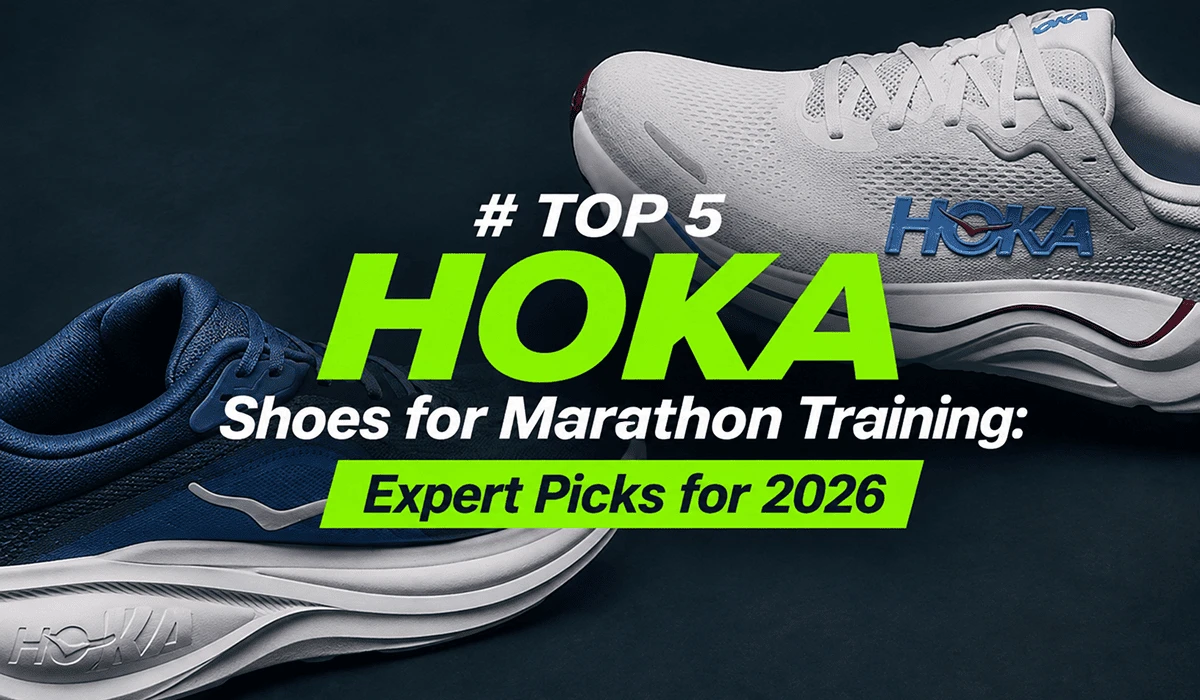
TOP 5 HOKA Shoes for Marathon Training: Expert Picks for 2026
Quick Answer
The best HOKA shoes for marathon training are the Clifton 11 for daily neutral miles, the Bondi 9 for maximum-cushion long runs, the Arahi 8 for stability support, the Mach 7 for tempo workouts, and the Cielo X1 3.0 for race-day speed. The right choice depends on whether your priority is recovery comfort, guided support, or race pace.
Five HOKA Marathon Shoes at a Glance
Marathon plans combine routine mileage, recovery runs, long efforts, tempo work, and race preparation. Your shoe should match the sessions it will cover most often and feel comfortable at the pace you expect to run. Cushioning preference, heel security, toe room, and familiarity with the shoe category all matter. Some runners use one pair throughout a training block, while others assign separate shoes to easy runs, workouts, and race day. These are editorial selections based on documented specifications and intended uses.
| Pick | Best for | Runner profile | Marathon-training role | Key trade-off |
|---|---|---|---|---|
| HOKA Clifton 11 | Neutral daily mileage | Runners wanting a balanced ride | Easy runs and run-walk sessions | Less focused on racing |
| HOKA Bondi 9 | Soft easy and long runs | Runners who prefer maximum cushioning | Recovery and comfortable long mileage | Built for comfort over speed |
| HOKA Arahi 8 | Mild-to-moderate guidance | Runners already comfortable with support | Daily and easy long runs | Guidance may feel unnecessary |
| HOKA Mach 7 | Tempo workouts | Neutral runners seeking responsiveness | Everyday road runs, tempo work, racing | Less soft than the Bondi 9 |
| HOKA Cielo X1 3.0 | Race day | Experienced runners chasing a PB | Marathon racing and race-specific testing | Narrow, snug, less stable platform |
HOKA Clifton 11: Balanced Neutral Daily Mileage
The Clifton 11 is a balanced neutral option for runners building routine road mileage. Its role fits easy runs and steady aerobic sessions, especially when you want one familiar shoe for much of the week.
The Clifton 11 is an option for runners who combine easy runs with walking breaks. Its cushioning helps soften impact, while a flexible forefoot allows the shoe to bend during push-off. Consider it for comfortable, easy-effort sessions, and choose a fit that feels secure without restricting your toes.
Browse the HOKA Collection for a broader model reference; consult model-specific pages for technical details.
HOKA Bondi 9: Soft Cushioning for Easy Long Runs
The Bondi 9 suits runners who want a soft, highly cushioned feel for easy days, recovery runs, long runs, and all-day walking. It is a neutral shoe with a stable platform, so it can work well when comfort is the priority during lower-intensity mileage.
RunUnited’s High Arches Guide describes the Bondi 9 as having maximum soft cushioning. The guide lists a 43 mm heel stack, 38 mm forefoot stack, and 5 mm drop in men’s sizing.
Maximum cushioning describes its comfort focus; it does not make the Bondi a corrective stability shoe.
HOKA Arahi 8: Mild-to-Moderate Stability Guidance
The Arahi 8 is for runners who already feel comfortable in shoes with guidance. Its H-Frame provides mild-to-moderate stability for daily training, easy long runs, recovery runs, walking, and standing.
RunUnited’s Stability Shoe Guide lists an 8 mm drop, a 41 mm heel stack, and a 33 mm forefoot stack. It also lists weights of 9.1 ounces for men’s sizing and 7.7 ounces for women’s sizing.
Marathon training alone does not establish a need for stability guidance. Consider the Arahi 8 if guided footwear has worked comfortably for you before. A fitting appointment can help you compare the underfoot feel and fit without treating a shoe choice as a diagnosis.
HOKA Mach 7: Tempo Workouts and Everyday Road Running
The Mach 7 is a neutral shoe with a responsive ride for faster training. Its documented uses are everyday road runs, tempo workouts, and racing, which makes it a practical addition when your plan includes quality sessions.
The Mach 7 Product Page lists a 37 mm heel stack, 32 mm forefoot stack, and 5 mm drop. That page is for the men’s Wide variant, so its fit and availability details apply to that version rather than every Mach 7 release.
Assess heel hold at your workout pace, especially when considering a different width.
HOKA Cielo X1 3.0: Marathon Race Day
The Cielo X1 3.0 is a plated, aggressive race shoe for experienced runners pursuing a marathon personal best. Consider it when choosing a dedicated competition shoe rather than a pair for most weekly training miles.
Its race-focused design brings a soft, narrow platform, a snug fit, and stability trade-offs that deserve attention before race day. It will not suit every runner or every marathon plan.
During race-specific testing, assess foot placement as fatigue builds, paying attention to lateral control and comfort.
How to Choose and Test Your Pair Before Marathon Day
Choose according to the sessions the shoe will cover and the support you already find comfortable:
- Clifton 11 or Bondi 9: start here for neutral running. Choose the Clifton for balanced daily mileage or the Bondi for softer, maximum-cushion easy and long runs.
- Arahi 8: consider it if you already benefit from stability guidance.
- Mach 7: consider it for faster training, including tempo workouts.
- Cielo X1 3.0: consider it for experienced runners seeking a dedicated competition shoe.
A daily trainer can cover most weekly mileage; a workout shoe or plated racer serves a more specific role. You do not need every category to prepare for a marathon.
Compare shoes under similar conditions, using your normal socks and a familiar route. Change one variable at a time so you can identify pressure points or slipping.
Use a repeatable fitting process:
- Wear the socks you normally run in.
- Check toe room while standing, walking, and jogging.
- Lace the shoe firmly enough to hold the heel without pressure points.
- Run at the pace you plan to use for that shoe.
- Test it in several scheduled sessions before a marathon.
- Recheck comfort after a longer run, when feet may feel different.
For in-person help, visit RunUnited’s Mansfield store and check store stock first. Ask the fitter to compare length, width, heel hold, and underfoot feel. Bring the shoes and socks you currently use if you are changing categories.
Choose for Your Training Plan
These five models cover distinct roles: the Clifton 11 handles neutral daily mileage, while the Bondi 9 prioritizes maximum cushioning for easy and long runs. The Arahi 8 provides guidance for runners who already benefit from support. Choose the Mach 7 for faster sessions, or consider the Cielo X1 3.0 as an experienced runner’s dedicated race-day option. You can use more than one pair across a marathon cycle, but a rotation is optional. Start with the role you need most, test the shoe in planned sessions, and let fit and intended use guide your final choice.
FAQ
Can I use one pair of HOKA shoes for a whole marathon block?
Yes. A versatile daily trainer like the HOKA Clifton 11 or Bondi 9 can handle an entire marathon training cycle. However, dedicated marathoners often pair a daily trainer with a lighter, faster shoe like the Mach 7 for speed workouts to reduce muscle fatigue and shoe wear.
How much room should I leave in the toe box?
Leave about a thumb’s width (about 0.5 inches / 1–1.5 cm) between your longest toe and the front of the shoe. Feet swell during 15+ mile marathon long runs, so most runners size up by a half-size compared to casual footwear.
Should I test a race shoe before marathon day?
Yes, absolutely. Put at least 30 to 50 miles on a race shoe like the HOKA Cielo X1 3.0 before race day. Test it during at least two long runs with blocks at goal marathon pace to confirm blister prevention, lockdown, and foot stability under fatigue.
Does a higher heel-to-toe drop mean more cushioning?
No. Drop describes the difference between heel and forefoot height. Stack height describes the amount of material under each area. Consider both measurements alongside the foam’s feel; a higher drop alone does not establish a softer ride.
When should I seek a professional fitting?
Seek fitting help when you are between sizes, trying a new width, changing shoe categories, or unsure about heel security and toe room. A fitter can help you compare options based on comfort and intended use.
EXPLORE POPULAR ARTICLES
-

TOP 5 HOKA Shoes for Marathon Training: Expert Picks for 2026
Nov 10th 2026Quick Answer The best HOKA shoes for marathon training are the Clifton 11 for daily neutral miles, t
-

12 Running Tips That Actually Make a Difference
Sep 30th 2026Whether you're chasing your first 5K or your tenth marathon, these 12 habits will help you run stron
-

Hoka Trail Shoes Compared [2026 Guide]
Sep 28th 2026Here, we explain and compare most popular Hoka trail shoes. By the end of this guide, you'll know wh

