
Gel-Kayano 33 vs GT-2000 15: Is the GT the New Kayano?

For years, picking between ASICS' two stability shoes was easy. The Kayano was the plush, premium pick. The GT-2000 was the lighter, more affordable sibling you chose if you didn't need all the bells and whistles.
This year, that's not so clear-cut anymore.
The Kayano 33 went through its biggest redesign in ages: a new foam setup, a new support system and a whole new approach to guiding your stride. Opinions are genuinely split. Plenty of runners call it the most comfortable Kayano yet, and some longtime fans say it rides much like the Kayano 32. Others, especially those who loved the 32's livelier feel, think something got lost along the way.
Meanwhile, the GT-2000 15 quietly got lighter, bouncier and more comfortable, its support feels natural and easy to forget about. Some Kayano 32 fans even say it reminds them of what they loved.
So, which one should you choose?
The Quick Take
Go with the GT-2000 15 if you run most of your miles at mixed paces, want one shoe that handles everything from easy jogs to faster workouts, have narrow-to-normal feet, and like a livelier ride. It's also $20 easier on the wallet.
Go with the Kayano 33 if you want more structure underfoot, spend a lot of time walking or standing, run mostly easy miles, prefer a plusher, more cushioned upper with more room over the toes, or have a heel or Achilles that needs extra care.
| Feature | Choose more if… | Choose less if… |
|---|---|---|
| Cushioning softness | You want a plush feel on smooth pavement | You walk on uneven ground or want a steadier platform |
| Stack height | You walk long distances or stand all day on concrete | You want ground feel and a flexible, lighter shoe |
| Stability features | Your feet roll inward enough to cause pain or injury | You have no pronation-related issues |
| Rocker sole | You have heel, Achilles, or big-toe joint pain | You want maximum stability and a traditional feel |
Specs at a glance
| Spec | Kayano 33 | GT-2000 15 |
|---|---|---|
| Weight (men’s US 9) | 298 g / 10.5 oz | 252 g / 8.9 oz |
| Stack height (men’s) | 40mm heel / 32mm forefoot | 38mm heel / 30mm forefoot |
| Drop | 8mm | 8mm |
| Midsole | FF Blast Max over FF Blast Plus, PureGEL heel | FF Blast Max, PureGEL heel, forefoot Trampoline Pod |
| Support system | FluidSupport | 3D Guidance System |
| Widths | Narrow, standard, wide, extra wide (men’s) Narrow, standard, wide (women’s) |
Standard, wide, extra wide (men’s) Narrow, standard, wide, extra-wide (women’s) |
What actually changed this year
Gel-Kayano 32 → Gel-Kayano 33
The big story is support. The Kayano 30 to 32 used the 4D Guidance System: a softer pocket of foam on the inner side of the midsole, right under the arch. You could often feel it as a gentle cushion or nudge under your arch as your foot rolled inward.
The Kayano 33 swaps that for FluidSupport, and there's no dedicated arch piece anymore. Instead, the whole shoe does the guiding:
- Two foams working together. Soft FF Blast Max sits right under your foot, and firmer FF Blast Plus sits below it and wraps up both sides, holding the softer foam in place like a cradle.
- A shaped inner heel. The inside of the heel is built up a little, so it gently steers your foot from landing into the middle of your stride.
- A wider footprint. A broad base, flared edges and longer strips of rubber on both sides keep more of the shoe in contact with the ground.
In practice, the support has moved from under your arch toward your heel. That one change explains a lot of what you'll read below.
ASICS also gave it a more rockered forefoot, a thicker tongue, soft fabric eyelet loops that go easy on the top of your foot, and a grippier outsole.
GT-2000 14 → GT-2000 15
The GT changed less on paper but more on the road. The 3D Guidance System, the PureGEL heel insert and the forefoot Trampoline Pod all stay. What's new is the foam and the shape.
The FF Blast Max midsole is softer and springier, with about 2 mm more of it underfoot, and the shoe still lost weight. It's about 1.4 to 1.6 oz lighter than the Kayano, depending on size, and you notice it. It's also the most rockered GT-2000 yet, with a rounder heel and a forefoot that rolls you through each step, plus it bends more easily than before.
One more welcome fix: the heel tab is now split so it flexes around your Achilles instead of pressing into it.
Ride and cushioning
Gel-Kayano 33: plush when you're cruising, steady when you push
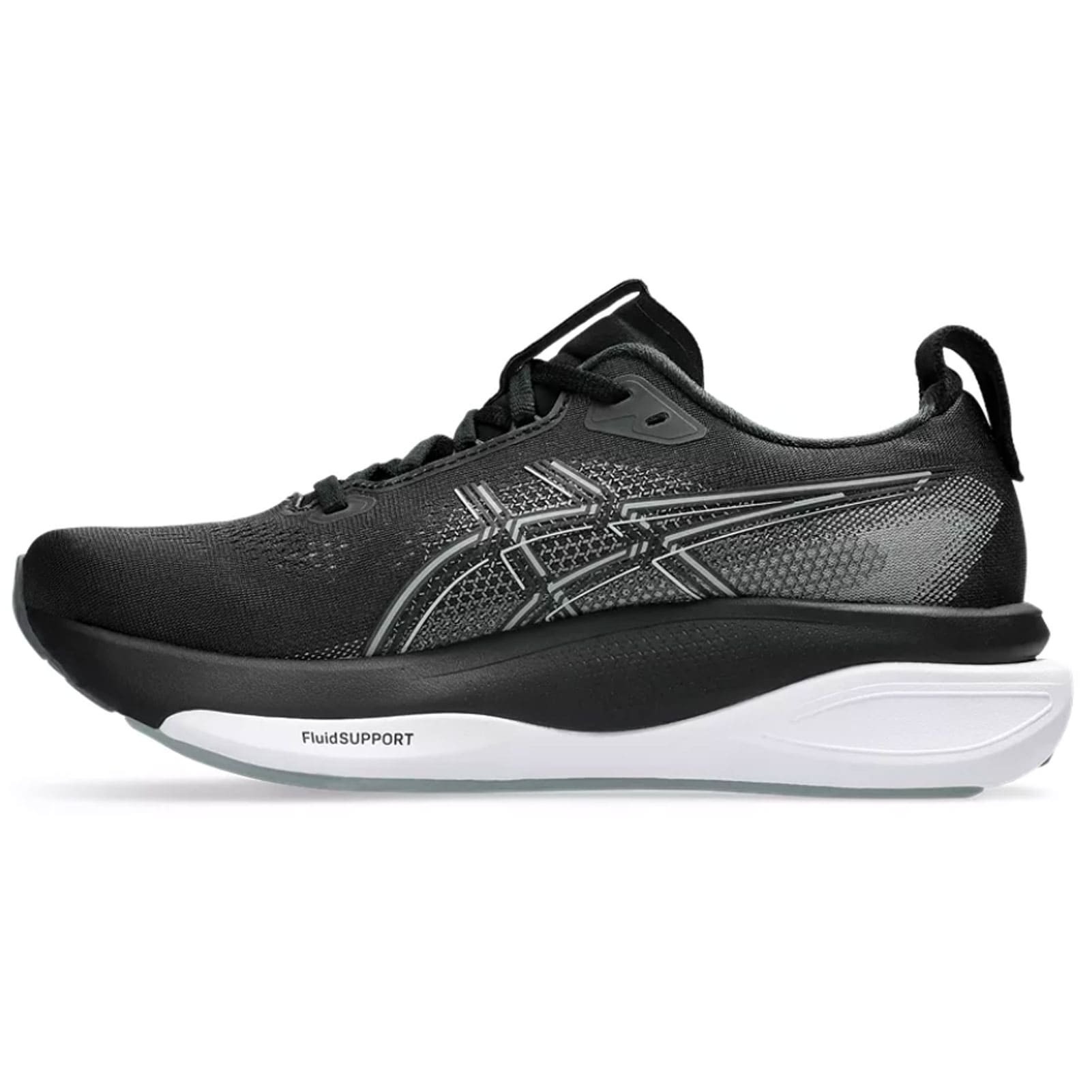
Ask a few runners about the Kayano 33 and you'll get different answers, and they're all kind of right. Some find it soft, smooth and more energetic than last year's. Others describe it as firmer and calmer than they expected.
It comes down to pace. That soft top foam squishes nicely at walking speed and on easy jogs, so it feels plush and cushy. Pick up the pace and you press down into the firmer foam underneath, and the shoe turns more stable and grounded. On recovery days that's lovely. On faster days it feels more like a steady cruiser than a shoe that wants to take off.
The one thing everyone agrees on: it's comfortable, protective and dependable mile after mile. It's a shoe for easy days, recovery runs and long, steady efforts.
GT-2000 15: light, springy and up for anything
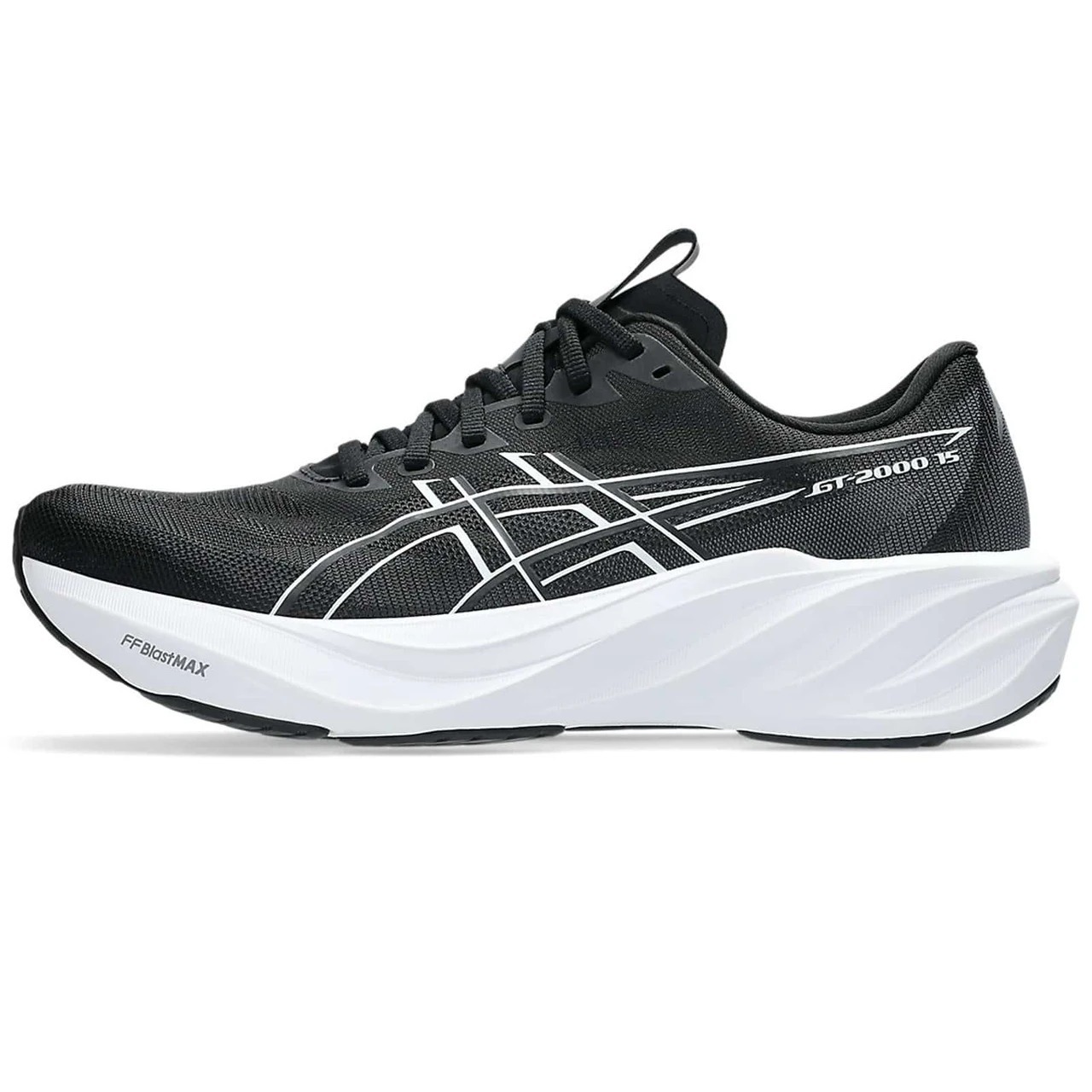
The GT-2000 15 feels bouncy at pretty much any pace. There's a nice little spring as you push off the toes (that's the Trampoline Pod doing its job), and it feels lighter on foot than the numbers suggest. Many runners found themselves comfortable on tempo runs, which isn't something you usually say about a stability shoe. Some runners find it surprisingly soft; others call it firm-ish in a protective way. Either way, it feels lively.
It's comfortable well into double-digit distances, and plenty of runners would take it on a full marathon. A few notice the forefoot feeling a touch less cushy toward the end of their very longest runs, so if you regularly go past 15 miles and need lots of forefoot cushion, the Kayano might suit those days better.
Bottom line: the GT-2000 15 is the more versatile running shoe for most people. The Kayano 33 shines if you mostly run easy and love a calm, grounded feel.
Stability and support
The Kayano 33 is still the more structured of the two. The wide base and raised sides make it feel really planted, and the heel in particular feels nicely guided. RunRepeat measured it as one of the most torsionally rigid shoes it has ever tested.
What's different is where you feel it. There's no more push under the arch, so the middle of the foot feels more natural and the support sits mostly at the heel. Lots of runners notice they can't really feel the support when walking anymore, yet their foot still feels kept in line once they start running. If that under-the-arch feeling is exactly what you loved about older Kayanos, it's worth trying the 33 on first; runners who need strong arch support may find it a little more relaxed than they're used to.
For many people, though, that's the best part. If older stability shoes ever felt bossy to you, or you're a neutral runner who just wants a bit of extra security on tired legs, the Kayano 33 feels natural and easy to live with.
The GT-2000 15 offers mild to moderate support that you mostly forget about. The ride feels centered, with gentle support running along the whole inside of the foot rather than in one spot, a lot like the Kayano 32. Its base is a bit narrower and more flexible than the Kayano's, so it's lighter-touch support, but for mild overpronation it feels just as natural, if not more so.
Bottom line: for mild overpronation, both work beautifully and the GT feels the most natural. If you want the most structure possible, or you're a heavier runner who loves a planted platform, go Kayano. Miss how the Kayano 32 felt? Try the GT first” is safer.
Fit and sizing
Kayano 33
True to size, with that classic Kayano step-in feel: a plush, padded collar that locks your heel in without any fancy lacing, a thicker tongue, and soft eyelet loops that keep pressure off the top of your foot. There's more room over the toes than in the GT, though the toe box gently tapers toward the little toes. If your forefoot is on the broader side, or you're unsure, go for the wide; it comes in narrow, wide and extra wide for men, and narrow and wide for women.
You might want to replace the thick stock insole for a thin one for a better lockdown, more room and a slightly more responsive feel.
GT-2000 15
The GT fits snug and sleek, with a lower, more tapered toe box. Lots of runners, even some with narrow feet, find it hugs pretty tightly at first. A few tricks that really help:
- Give it a few runs. The upper softens up over the first 15 km or so and settles into a true-to-size fit.
- Relace it. If it feels tight out of the box, unlace it fully and relace from front to back. It makes a real difference.
- Go half a size up if your toes still feel cramped. The 2E and 4E versions add width, but not much height over the toes, so sizing up works better if your toes feel pressed from above.
The heel counter is on the firmer side. Most runners love the locked-in feel; if your Achilles is sensitive, just try it on first.
Bottom line: higher-volume toes or a sensitive heel lean Kayano (in a wide if your forefoot is broad). Narrow-to-normal feet that like a snug, secure fit will feel right at home in the GT. Either way, these are worth trying on in person.
Durability, grip, and everyday wear
Both shoes are built to go the distance. The GT's outsole is especially tough and shows very little wear, and the Kayano's thick rubber holds up great too. Since both foams are softer this year, it's worth keeping an eye on how they feel as the miles pile up, just like with any new shoe.
On roads and sidewalks, both grip well, and the Kayano’s new hybrid outsole feels especially sticky and confident. The GT is happiest on pavement too; on dusty paths or loose dirt, take it a bit easier on corners. If you're heading off-road regularly, ASICS makes a trail version of the GT-2000.
Buying mainly for walking or standing all day at work? The Kayano 33 is honestly fantastic at this. The same soft-at-slow-speed feel that makes it a cruiser on runs is exactly what keeps your feet happy for hours. The GT-2000 15 is a great walker too, with a bit more spring thanks to its rocker; just keep the snugger toe box in mind if your feet tend to swell over a long day.
So, did the GT become the better Kayano?
Not exactly, and that's actually good news. This year the two shoes just got better at different things.
The GT-2000 15 is now the more versatile running shoe: lighter, bouncier, more affordable, and for mild overpronation it feels every bit as stable on the run. If you're after one shoe that handles easy days, long runs and the odd tempo session, it's a fantastic pick.
The Kayano 33 is still ASICS' most structured and most cushioned stability shoe. It's the calmer, plusher choice for easy miles, long days on your feet, heavier runners, and anyone who wants the most support ASICS makes.
So rather than one replacing the other, think of it this way: GT for doing a bit of everything, Kayano for comfort and structure first.
Who should buy which
| If you are… | Pick |
|---|---|
| Running 3 to 10 miles at mixed paces several times a week | GT-2000 15 |
| Looking for one stability shoe for easy runs and tempo work | GT-2000 15 |
| A former Kayano 32 fan who loved its ride | GT-2000 15 (or a discounted Kayano 32) |
| On a budget | GT-2000 15 |
| Mostly logging slow, easy miles; recovery runs | Kayano 33 |
| A heavier runner who wants maximum structure | Kayano 33 |
| On your feet all day for work, or walking more than running | Kayano 33 |
| Someone with high-volume toes or a sensitive heel | Kayano 33 (try the wide) |
| Not sure, and running a lot | Both: GT on weekdays, Kayano for long easy runs |
FAQs
What's the main difference between the ASICS Kayano 33 and GT-2000 15?
The Kayano 33 is ASICS' most structured and most cushioned stability shoe, built for comfort and easy miles. The GT-2000 15 is lighter, bouncier and cheaper, with mild-to-moderate support that suits mixed-pace daily training. Both have an 8 mm drop and use ASICS' FF Blast Max foam.
Is the GT-2000 15 as stable as the Kayano 33?
The GT-2000 15 feels similarly stable for mild overpronation, but the Kayano 33 offers more structure. The Kayano 33's wider base, firmer sidewalls and shaped heel make it the better pick for runners who overpronate more noticeably or heavier runners who want a planted platform.
Which is softer, the Kayano 33 or the GT-2000 15?
The Kayano 33 feels softer and plusher at walking and easy-jogging pace, then steadier as you speed up. The GT-2000 15 feels bouncier and more consistent across all paces.
Is the Kayano 33 or GT-2000 15 better for long runs?
Both work well for long runs. The Kayano 33 is the more cushioned, protective choice for long, slow miles, while the GT-2000 15 suits long runs that include faster segments.
Is the Kayano 33 or GT-2000 15 better for walking or standing all day?
The Kayano 33 is the better choice for walking and standing all day. Its soft top foam feels plush at walking pace, its wide base keeps you planted, and its padded upper with more room over the toes stays comfortable for hours. The GT-2000 15 is a good walking shoe too, especially if you like a springier, rocking feel, but its snugger toe box makes the Kayano 33 the safer bet for long shifts.
Do the Kayano 33 and GT-2000 15 fit the same?
Both run true to length, but they fit differently. The GT-2000 15 has a lower, snugger toe box that loosens after the first 15 km or so; if your toes still feel cramped, go up half a size, since the 2E and 4E widths add width but not much height. The Kayano 33 has more room over the toes but tapers slightly at the outer toes, so runners with a broad forefoot should try the wide version.
Does the Kayano 33 still have arch support?
The Kayano 33 no longer has a dedicated arch feature like the 4D Guidance System in the Kayano 30 to 32. Its new FluidSupport system guides your foot through the shoe's shape and two foam layers, with support focused mostly at the heel. If you like feeling support under your arch, try it on first or consider the GT-2000 15.
Is the Kayano 33 good for plantar fasciitis or heavier runners?
The Kayano 33 is often recommended for runners with plantar fascia discomfort and for heavier runners who find soft neutral shoes too wobbly, thanks to its structure and cushioning. A shoe isn't a treatment, though, so see a physio or podiatrist about ongoing pain.
Can you race in the Kayano 33 or GT-2000 15?
The GT-2000 15 is the better option for racing or faster workouts. It handles tempo runs well, and some runners who need stability would happily race a half or full marathon in it. The Kayano 33 is best for easy days, recovery runs and long runs.
Should I upgrade from the Kayano 32 to the Kayano 33?
It depends on what you loved about the Kayano 32. If it was the lively, bouncy ride, the GT-2000 15 is well worth a look (or grab a Kayano 32 on sale while you can). If you specifically liked feeling support under your arch, try both new shoes on first, since neither has the 32’s dedicated arch piece. And if you want maximum comfort on easy days with support that stays out of your way, the Kayano 33 is a natural next step, and plenty of Kayano 32 fans feel right at home in it.
Can neutral runners wear the Kayano 33 or GT-2000 15?
Yes. Neither shoe forces your foot into position, and many neutral runners use them for recovery days or high-mileage weeks. The GT-2000 15 is the lighter, less noticeable option for neutral runners.
Do I need a stability shoe like the Kayano 33 or GT-2000 15?
Not necessarily. If neutral shoes have always felt good, there's no need to switch. A gait analysis at a running store can help if you're unsure, but how a shoe feels on your own feet should be the deciding factor.
EXPLORE POPULAR ARTICLES
-

Gel-Kayano 33 vs GT-2000 15: Is the GT the New Kayano?
Nov 12th 2026For years, picking between ASICS' two stability shoes was easy. The Kayano was the plush, premium
-

TOP 5 HOKA Shoes for Marathon Training: Expert Picks for 2026
Nov 10th 2026Quick Answer The best HOKA shoes for marathon training are the Clifton 11 for daily neutral miles, t
-

12 Running Tips That Actually Make a Difference
Sep 30th 2026Whether you're chasing your first 5K or your tenth marathon, these 12 habits will help you run stron

